

You cleanse your face every night, and you have switched skincare products, cut back on chocolate and dairy, and tried everything possible.
But the same red, sometimes painful bumps keep showing up. Sound familiar? Breakouts in this zone are tricky, since they often do not respond to regular acne treatment.
Here is the simple truth: not all bumps around your mouth are acne, which is exactly why your usual routine isn’t working.
If you’ve been asking yourself, why am I breaking out around my mouth, this blog will walk you through the common causes, along with what steps may help clear the problem.
What Do Breakouts Around the Mouth Look Like?
Breakouts around the mouth can look similar, but their features hint at the real cause.
Whiteheads or blackheads point to acne, since whiteheads come from closed pores and blackheads from open pores where oil oxidizes.
Inflamed acne shows up as red, swollen, tender bumps, sometimes with white or yellow centers. Perioral dermatitis looks different.
It causes small red bumps surrounded by dry, flaky skin, often with a burning or stinging feeling instead of soreness, and it can spread near the nose or eyes without the blackheads or whiteheads typical of acne.
Why Am I Breaking Out Around My Mouth?

Breakouts around the mouth usually come down to a handful of everyday triggers hiding in plain sight. Once you know what to look for, it becomes a lot easier to connect the dots.
Hormonal Changes
Hormonal changes are one of the common reasons people develop acne around the lower face. Hormonal changes during menstruation, pregnancy, or after starting or stopping contraception can cause breakouts.
That said, not every breakout near the mouth is acne.
If you are also seeing blackheads, whiteheads, oily skin, or deeper pimples, acne becomes more likely than perioral dermatitis.
Toothpaste and Oral Care Products
Toothpaste and oral care products can irritate the skin around the lips. Flavorings, whitening agents, or preservatives may trigger reactions on contact.
Fluoridated toothpaste has been discussed as a possible contributor to perioral dermatitis, though it is not responsible for every case.
If brushing seems to make the rash worse, ask a dentist or dermatologist about a gentler formula. Do not stop using fluoride toothpaste unless your dentist recommends it.
Cosmetics and Lip Products
Cosmetics and lip products can contribute to breakouts around the mouth. Products applied around the mouth stay in contact with the skin for hours.
Heavy lip balms, glosses, foundations, and rich creams may block pores, while fragrances and preservatives can irritate sensitive skin.
If you suspect one of your products is responsible for breakouts around the mouth, avoid changing everything at once. Instead, remove one product at a time.
Touching Your Face or Phone
Touching your face or phone can create friction and transfer oil, makeup, skincare residue, and bacteria to your skin, which may worsen acne or irritate already sensitive skin.
Clean your phone regularly. Avoiding unnecessary face touching can help reduce irritation.
Shaving and Ingrown Hairs
Shaving and ingrown hairs can cause breakouts around the mouth.
If you shave around your mouth, chin, or upper lip, irritation from shaving may be the trigger. Building better grooming habits can go a long way in preventing this kind of irritation.
Razor bumps and ingrown hairs often appear as red bumps that form around trapped hairs. Using a razor, shaving with the direction of hair growth, and avoiding repeated passes over irritated skin can help.
Diet and Acne
Diet and acne are related. Diet is not responsible for every breakout.
Diet may play a role for some people, and research suggests that high-glycemic foods and certain dairy products may worsen acne.
Rather than eliminating multiple food groups after one breakout, try keeping a food and symptom journal. If you notice a pattern, discuss it with a healthcare professional before making major dietary changes.
Note: Not every bump above is acne. If your symptoms don’t quite match a typical breakout, you may be dealing with a different condition called perioral dermatitis.
Is It Acne or Perioral Dermatitis?

Once you’ve noticed how the bumps look and feel, the next step is confirming which condition actually matches your symptoms. A proper diagnosis matters here, since treating one condition like the other can make it worse.
| Features | Acne | Perioral dermatitis |
|---|---|---|
| Appearance | Blackheads, whiteheads, red pimples, or deeper lumps | Small grouped bumps with dry or flaky skin |
| Location | Can occur anywhere on the face | Usually around the mouth and may spread to the nose or eyes |
| Skin feel | Often oily or tender | May feel dry, rough, burning, or itchy |
| Comedones | Blackheads and whiteheads are common | Usually absent |
| Common factors | Oil, clogged pores, hormones, and genetics | Facial steroid exposure and skin irritation may contribute |
| Steroid response | Steroids are not a standard acne treatment | May improve briefly, then rebound after withdrawal |
| First step | Use a gentle routine and evidence-based acne treatment | Avoid self-treatment and seek medical advice if steroid use is involved |
How to Care for Breakouts Around the Mouth?
The key is to identify the cause of the bumps; however, starting with a gentle skincare regimen is a good idea regardless.
1. Simplify Your Routine and Check New Products
Focus on the essentials: a gentle cleanser, a fragrance-free moisturizer, and a non-comedogenic sunscreen. Following a step-by-step routine can make it easier to spot what’s actually working.
If you have just introduced serums, exfoliants, and/or lip products into your routine, try discontinuing them one by one instead of all together. This will make it much simpler to pinpoint the cause.
2. Clean Gently Without Scrubbing
Cleanse once or twice each day using warm water and a gentle cleanser. A consistent evening cleansing habit sets the stage for skin to repair itself overnight.
Avoid rough scrubs, cleansing brushes, rough washcloths, or over-cleansing since this could cause more irritation without addressing the root problem.
3. Avoid Picking or Squeezing
Popping spots causes inflammation, delays the healing process, and could leave dark marks or permanent scars.
In the event that the rashes are actually perioral dermatitis instead of acne, popping the spots would cause further irritation.
4. Clean Items That Touch Your Face
Phones, makeup brushes, razors, face masks, and reusable water bottles all come into regular contact with your skin.
Regularly clean phones, makeup brushes, razors, masks, and reusable water bottles.
This removes oil, skincare residue, and buildup that may aggravate the skin, similar to the excess oil that builds up around the nose and T-zone.
Change pillowcases regularly, particularly if hair or skincare products collect on them.
5. How to Spot a Pattern
Keep a short record of your menstrual cycle, new skincare products, lip products, oral-care products, medicines, and symptoms.
Note whether you have blackheads, dryness, scaling, burning, or deeper pimples. This record may help you and your dermatologist distinguish hormonal acne from irritation or perioral dermatitis.
What are the Best Treatments for Acne Around the Mouth?
Rule out perioral dermatitis before applying strong acne products near the mouth. If the bumps are acne, treatment may include:
- Benzoyl peroxide: Reduces acne-causing bacteria and inflammation.
- Salicylic acid: Helps loosen dead skin and clear clogged pores.
- Topical retinoids: Prevent clogged pores and improve acne over time.
- Azelaic acid: May help reduce acne and post-acne dark marks.
- Prescription treatment: A dermatologist may recommend topical combinations, oral antibiotics, hormonal treatment, or isotretinoin.
Note: Start with one active treatment instead of using several products at the same time.
When Should You See a Dermatologist?
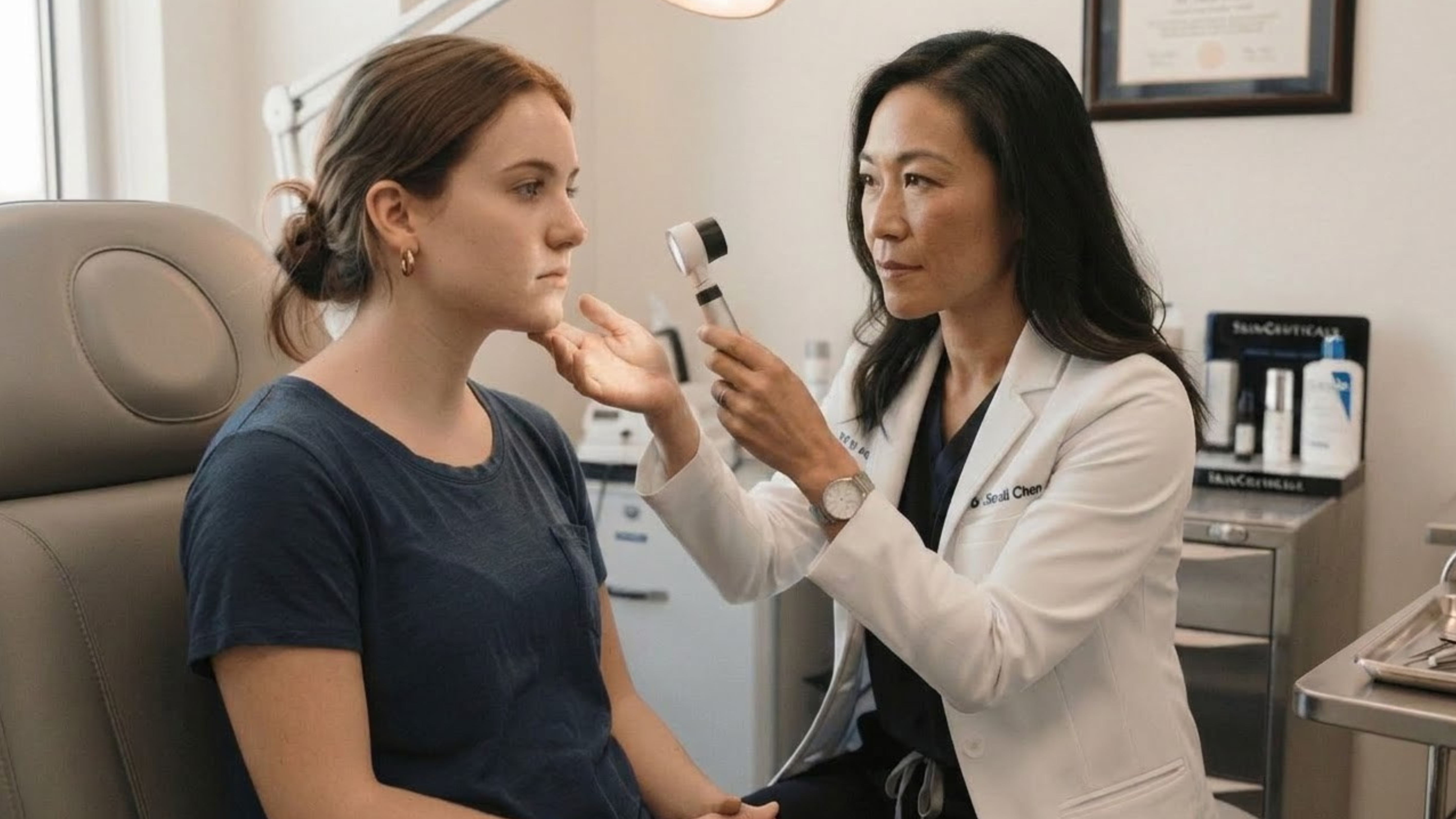
See a dermatologist if the bumps stay, become painful, leave scars or dark marks, or do not get better after regular gentle care.
Seek advice sooner if the rash spreads around the nose or eyes, becomes dry or scaly, or repeatedly worsens after using steroid cream.
These signs may point to perioral dermatitis rather than acne.
Perioral dermatitis can resemble acne or eczema, so a professional diagnosis can help you avoid products that may worsen the condition.
The Bottom Line
Persistent bumps around the mouth deserve a closer look rather than another round of the same products.
Pay attention to what changes alongside the breakouts, whether that’s a new skincare habit, a stressful week, or a shift in your cycle, and give your skin a chance to settle before trying something new.
Small adjustments often reveal more than switching products all at once.
And if things aren’t improving on their own, getting a proper diagnosis will save you time, money, and frustration in the long run.
Frequently Asked Questions
Can Stress Cause Breakouts Around the Mouth?
Yes. Stress raises cortisol, which boosts oil production and can trigger flare-ups around the mouth and chin.
Is Perioral Dermatitis Contagious?
No. It’s not an infection. It comes from irritation, steroid use, or product triggers on your own skin.
How Long Do Mouth-Area Breakouts Take to Clear Up?
Mild acne often clears in 2-4 weeks. Perioral dermatitis can take a few months, especially after stopping steroid creams.
Could My Skin-Care Routine Be Causing the Breakout?
Yes. Heavy creams, exfoliants, or new active ingredients can irritate this area and clog pores, especially with frequent product changes.