
Korean skincare has become one of the most trusted approaches to daily skincare because it focuses on consistency, hydration, and prevention.
The well-known 10-step Korean skincare routine is not about quick results or using as many products as possible.
It is a structured method that helps cleanse, hydrate, treat, and protect the skin in the right order, and each step has a specific purpose.
What is the Korean Skincare Routine?
The Korean skincare routine is a layered skincare method built around gentle cleansing, hydration, treatment, and sun protection.
The main idea is simple: support the skin barrier, keep the skin hydrated, and treat concerns before they become harder to manage.
With regular use, this routine can help improve texture, tone, softness, and moisture retention and achieve the Korean skin standard.
The 10 Korean Skincare Steps
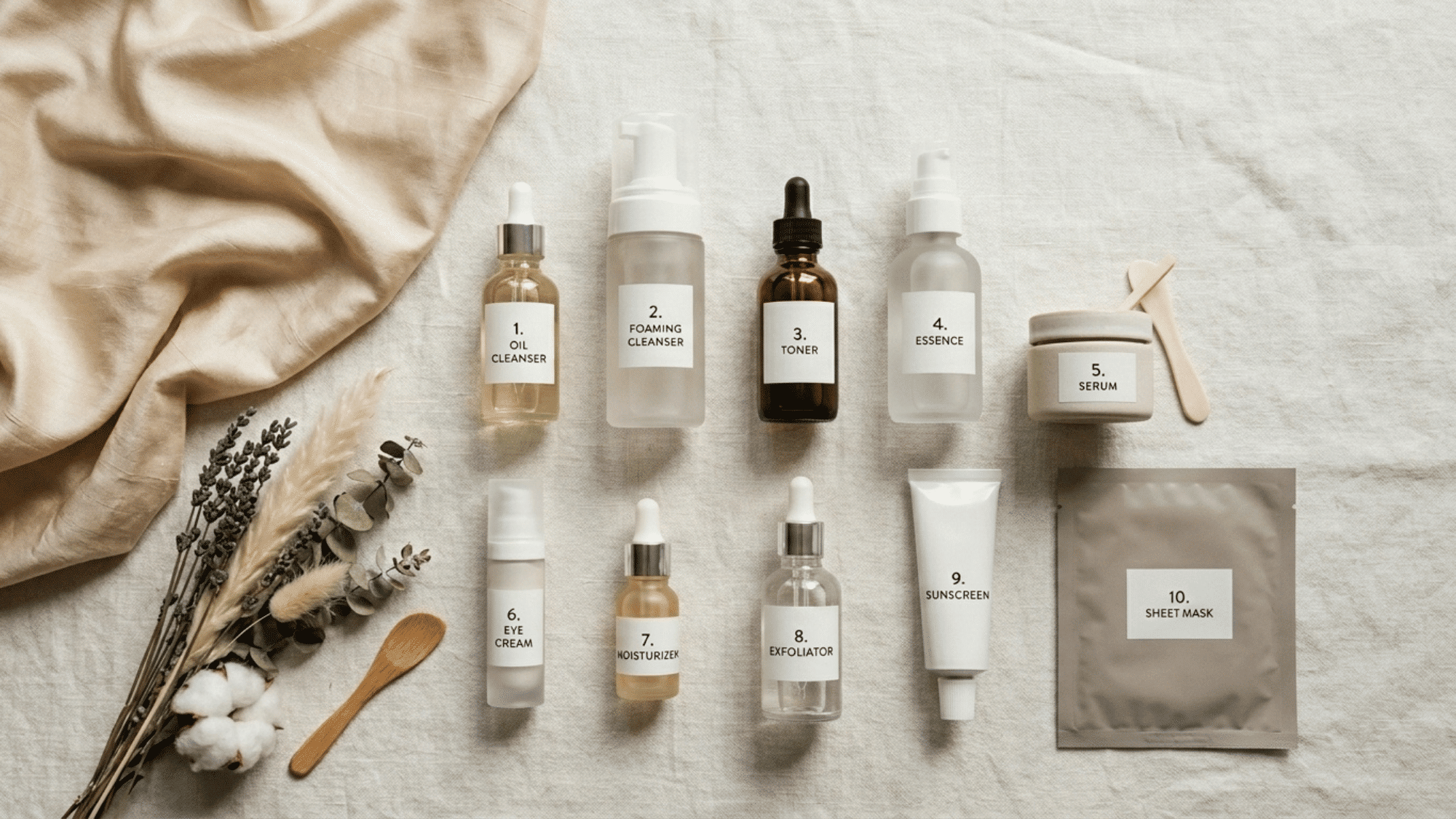
These steps are usually applied from the thinnest texture to the thickest. From cleansing to sunscreen, all in one blog.
Step 1: Oil Cleanser
Cleansing is the most important part of the Korean skincare steps, as it helps remove all the gunk from the skin.
An oil cleanser is used to remove oil-based impurities such as sunscreen, makeup, sebum, and pollution. Since water does not remove oil well, this step is especially useful at night.
Apply the oil cleanser to dry skin and massage for 30 to 60 seconds. Add lukewarm water to emulsify the product until it turns milky, then rinse well.
Step 2: Water-Based Cleanser
The second cleanse removes sweat, dirt, and leftover oil cleanser. It gives the skin a clean base without requiring harsh scrubbing.
Oily or combination skin usually does well with a gentle foaming gel cleanser.
Dry or sensitive skin may prefer a low-pH cream, milk, or soft gel cleanser. Normal skin can use a lightweight gel cleanser.
Step 3: Exfoliator, 2–3 Times per Week
Exfoliation helps remove dead skin cells that can make the skin look dull or rough. It can also help other products absorb better.
However, this step should not be used daily because over-exfoliation can damage the skin barrier.
There are three common types of exfoliants.
- Physical exfoliants use fine particles to polish the skin, but they should be used gently.
- Chemical exfoliants include AHAs, such as glycolic or lactic acid, and BHAs, such as salicylic acid.
- Enzyme exfoliants are often gentler and may suit reactive skin.
Use an exfoliator after cleansing and before toner. Sensitive skin should begin once per week and increase only if the skin feels comfortable.
Step 4: Toner
Korean toner is usually different from old-style astringent toners. It is not meant to strip the skin. Instead, it adds a light layer of hydration and prepares the skin for the next products.
Toners help maintain the PH of the skin by ensuring that the acid mantle remains intact
Apply toner by patting it in with clean hands or using a cotton pad. Avoid rubbing, especially if your skin is irritated.
Step 5: Essence
Essence is one of the most recognized steps in Korean skincare. It is a lightweight treatment layer that usually contains hydrating and skin-supporting ingredients.
Apply a small amount to your palms and press it into the face and neck. Let it absorb before moving to serum. If the essence feels sticky or sits on the skin’s surface, you may be using too much.
This step is helpful for people who want extra hydration without the heaviness of a cream.
Step 6: Serum, Ampoule, or Booster
This is the main treatment step. Serums, ampoules, and boosters target specific skin concerns such as dark spots, fine lines, dehydration, redness, or breakouts.
Each serum targets a different problem; for hyperpigmentation, look for vitamin C, arbutin, or kojic acid. For fine lines, retinol and peptides may help. Choose depending on your skin concern.
Ampoules are usually more concentrated than serums and may be used for short periods. Apply treatment products in thin layers and avoid mixing too many strong actives at once.
Step 7: Sheet Mask, 2–3 Times per Week
Sheet masks are fabric masks soaked in serum or essence. They give the skin a temporary moisture boost and can be helpful when the skin feels tired, tight, or dry.
There are also reusable masks on the market now that are cheaper and better for the environment.
Use a sheet mask after toner or essence. Leave it on for 15 to 20 minutes. Do not wait until the mask dries, because that can pull moisture away from the skin.
Sheet masks are not required every day. They are best used a few times per week or when your skin needs extra comfort.
Step 8: Eye Cream
The skin around the eyes is thinner than the skin on the rest of the face. It also has fewer oil glands, which means it can become dry more easily.
Eye cream helps moisturize this area and can support concerns such as puffiness, fine lines, and dark circles.
Apply eye cream with your ring finger and tap gently around the orbital bone. Do not rub or apply too close to the lash line.
Step 9: Moisturizer
Moisturizer seals in the lighter layers used before it and helps reduce water loss. It is essential for keeping the skin barrier strong.
- Dry skin does best with a richer cream or balm, look for ceramides, shea butter, or petrolatum
- Oily or combination skin usually sits better with a gel-cream or water-gel
- Sensitive skin should go fragrance-free, with ceramides, cholesterol, and fatty acids
- Normal skin can use a lightweight lotion or emulsion without overthinking it
Apply moisturizer while the skin is still slightly damp. In the morning, use a lighter texture if preferred. At night, a richer formula can help the skin feel more comfortable by morning.
Step 10: Sunscreen
Sunscreen is the final step in the morning routine. It helps protect the skin from UV damage, uneven tone, early signs of aging, and sun-related skin risks.
Use broad-spectrum sunscreen every morning. SPF 30 to 50 is usually recommended for daily use
Apply sunscreen after moisturizer has absorbed. Use enough to cover the face and neck evenly. Reapply every two hours if you are outdoors, sweating, or wiping your face.
AM vs. PM Korean Skincare Routine
| Routine | Main Focus | Products to Use | Best Ingredients |
|---|---|---|---|
| Morning Routine | Hydration and protection | Water-based cleanser, toner, essence, serum, moisturizer, sunscreen | Vitamin C, niacinamide, hyaluronic acid |
| Evening Routine | Cleansing and treatment | Oil cleanser, water-based cleanser, exfoliator on selected nights, toner, essence, serum, eye cream, moisturizer | Retinol, exfoliating acids, ceramides, barrier-repair ingredients |
How to Adjust the Routine for Your Skin Type?
The 10-step Korean skincare routine is flexible. Introduce new products slowly. Adding one product at a time helps you see what works and what causes irritation.
- Oily or acne-prone skin should use lightweight, non-comedogenic formulas and may benefit from BHA or niacinamide.
- Dry skin should focus on hydrating toner, essence, serum, and a richer moisturizer.
- Sensitive skin should avoid harsh scrubs, fragrances, and excessive active ingredients.
- Combination skin can use lighter products on the T-zone and richer products on dry areas.
- Mature skin may benefit from retinol at night, peptides, ceramides, and daily sunscreen.
Final Glow Notes
The 10-step Korean skincare routine is a helpful framework, not a strict rule. You do not need every step every single day to see results.
A simple routine with cleanser, toner, essence, serum, moisturizer, and sunscreen can be enough for many skin types.
The full routine is useful when you want to target concerns such as dryness, dullness, clogged pores, fine lines, or uneven skin tone.
Start with the basics, see how your skin responds, and add extra steps only when they serve a clear purpose.
Frequently Asked Questions
How Long Does It Take to See Results from The Korean Skincare Routine?
Hydration and Softness May Improve Within a Few Days. Texture and Tone Usually Take 4–6 Weeks. Dark Spots, Fine Lines, and Firmness Concerns May Need 8–12 Weeks or Longer.
Is the Korean Skincare Routine Suitable for Men?
Yes. The method is based on skin needs, not gender. Cleansing, Hydration, Treatment, Moisturizer, and Sunscreen Work for Anyone.
Do I Need Korean-Brand Products for This Routine to Work?
No, the Routine Is a Method. Products from Any Brand Can Work as Long as They Match Your Skin Type, Ingredient Needs, and Tolerance Level.
Can I Skip Sunscreen if I Stay Indoors?
It is better not to skip it. UVA rays can pass through window glass, and daily sunscreen helps protect against early signs of aging and uneven tone.