
Most people search for vitamin C serum results to see visible improvements rather than rely solely on product claims.
A bottle sitting on a shelf can show the ingredients, but it cannot show how skin may change with consistent use. A clear photo taken weeks apart often gives a better idea of what gradual improvements can look like.
This blog takes a closer look at a realistic vitamin C serum before and after timeline, week by week. It covers when brightness, smoother texture, and a healthier glow may appear.
Basics of Vitamin C Serum
Vitamin C is an essential nutrient and powerful antioxidant that supports several important functions in the body. It helps with collagen production, wound healing, iron absorption, and immune health.
The body cannot make vitamin C on its own, so it must come from foods such as citrus fruits, berries, bell peppers, and leafy vegetables.
In skincare, vitamin C is commonly added to serums and creams because it can brighten dull skin, support firmness, reduce the appearance of dark spots, and protect the skin from environmental stress.
Pairing it with other vitamins for glow can round out a brightening routine.
Factors That Influence Vitamin C Serum Results
Vitamin C serum does not work at the same speed for everyone. Skin type, age, consistency, product strength, and storage can all affect how soon changes become visible.
- Age: Mature skin may take longer to show visible signs of change.
- Skin type: Oily skin may brighten sooner than dry skin, and choosing the right formula for oily skin can make a noticeable difference.
- Skin concern: Newer marks may fade faster than older spots.
- Consistency: Regular use supports steadier and more noticeable results.
- Serum strength: Concentration and formula can affect overall performance.
- Storage: Heat, light, and air may weaken the serum over time.
Vitamin C Serum Before and After Timeline
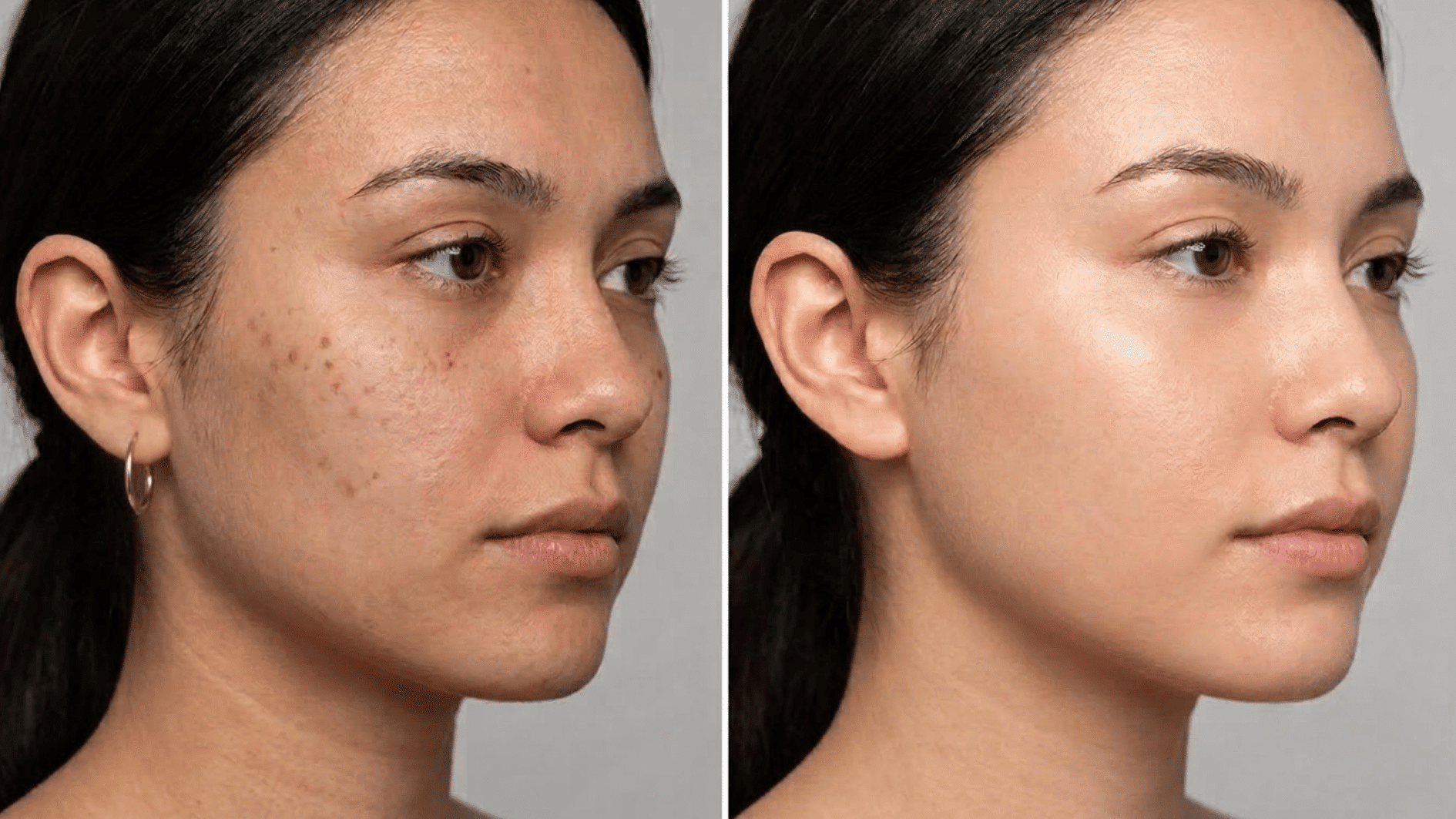
Vitamin C serum results often appear in four stages, following the skin’s natural renewal cycle of about 28 days. The timeline may vary with age, regular use, serum strength, and daily sunscreen.
First Use to 1 Week: Initial Improvements
During the first few days, the skin may still look dull, uneven, or slightly rough. Major visible changes are unlikely to appear this early.
After five to seven days of regular use, the skin may feel smoother, fresher, and less dry.
A mild glow or slight brightening may also become noticeable, especially when paired with a consistent nighttime skincare routine.
2 to 4 Weeks: Visible Brightening and Mark Reduction
With consistent use, the skin may begin to look brighter and more even within two to four weeks. Newer acne marks may also start to fade.
Older pigmentation and deeper spots may still remain visible. Vitamin C may gradually support smoother texture by helping with collagen production.
4 to 8 Weeks: Even Tone and Smoother Texture
Between four and eight weeks, dullness, tanning, and uneven tone may become less noticeable.
The skin may also appear clearer and more radiant, an effect many follower of Korean skincare steps already build their routines around.
Daily sunscreen can help protect these results and prevent further darkening. Fine lines and rough texture may also begin to soften.
8 to 12 Weeks: Longer-Term Improvements
After eight to twelve weeks, dark spots, acne marks, and uneven pigmentation may look noticeably lighter. The overall complexion may appear brighter and more balanced.
Those focused on aging concerns often look into options built for smoothing fine lines at this stage.
Continued use may also help the skin look smoother, firmer, and healthier. It can support the skin barrier and reduce visible environmental damage.
Which Vitamin C Percentage Is Right for Your Skin?
The ideal vitamin C strength depends on your skin type, concerns, and how well your skin handles active ingredients.
| Skin Type | Primary Concern | Current Tolerance | Recommended Percentage |
|---|---|---|---|
| Sensitive / Rosacea-prone | Basic antioxidant protection | New user | 5% |
| Normal / Combination | Brightening and mild pigmentation | Some active experience | 10% |
| Normal / Oily | Collagen support and daily maintenance | Established tolerance | 10–15% |
| Resilient / Non-reactive | Deep sun damage, melasma, advanced aging | Experienced with acids | 20% |
| Post-procedure (healed) | Recovery support | Varies | 10% |
Real-Life Vitamin C Serum Results and Improvements

Users often notice gradual changes with consistent vitamin C use, from a brighter glow to a more even tone. Real experiences show how the timeline for results can vary based on skin type, formula, and routine.
Vitamin C works gradually, with visible changes often appearing after weeks of consistent use. It may help improve the appearance of dark spots, uneven tone, and dullness while supporting collagen and protecting skin from environmental stress. It is more of a long-term skin-supporting ingredient than an instant anti-aging solution. – __AV___
Daily vitamin C serum use over a few months may improve skin glow, even out skin tone, and reduce the appearance of leftover marks. Results often depend on consistency and the formula used. – Space-cats7
A premium vitamin C formula may show noticeable improvements for some people within a month. Higher-priced serums can feel worthwhile when they provide better results than cheaper options and last longer with regular use. – finalgirlkate
L-ascorbic acid formulas stabilized with ferulic acid are often preferred for improving skin texture and evenness. Some formulations may show faster visible changes, while vitamin C derivatives can work differently depending on the formula and skin response. – alexcali2014
Common Mistakes That Affect Vitamin C Serum Results
Even a well-formulated serum may not perform as expected when it is used incorrectly. Small routine mistakes can slow visible improvement or make the product less effective.
- Using it inconsistently: Applying the serum irregularly can make visible changes take longer.
- Skipping sunscreen: Sun exposure may worsen uneven tone and reduce the serum’s benefits, a habit that follows the same logic behind K-beauty standards of daily SPF.
- Applying too much: Extra product will not speed results and may increase irritation.
- Storing it incorrectly: Heat, light, and air can weaken the formula over time.
- Using oxidized serum: A dark orange or brown color may mean the product is ineffective.
- Mixing too many actives: Combining strong ingredients may cause irritation, making the routine harder.
- Expecting quick results: Most visible improvements develop gradually after several weeks of use.
Wrapping It Up
A realistic vitamin C serum before and after comparison shows gradual changes, from early brightness to slower improvements in texture and dark spots.
Concerns like stubborn marks and uneven texture usually need more time and consistent use. Tracking small changes can make the progress easier to notice.
Over several weeks, simple habits like sun protection and a steady routine can support healthier-looking skin. Realistic expectations often lead to better long-term results.
Frequently Asked Questions
How Long Does It Take to See Results from Vitamin C Serum?
Most people notice a brighter glow within a few weeks, while dark spots and texture changes may take 8 to 12 weeks of consistent use.
Can I Use a Vitamin C Serum Daily?
Yes, many people use vitamin C daily, especially in the morning with sunscreen. Start slowly if your skin is sensitive.
What is the Best Time to Apply Vitamin C Serum?
Morning is often recommended because vitamin C helps protect skin from environmental stress when paired with sunscreen.
Which Is Better, Niacinamide or Vitamin C?
Both ingredients support skin health in different ways. Vitamin C is often used for brightness and uneven tone, while niacinamide helps with oil balance and skin barrier support.
What Happens when I Stop Using Vitamin C Serum?
Your skin may gradually lose some of the improvements from regular use, such as brightness and a more even-looking tone, over time.