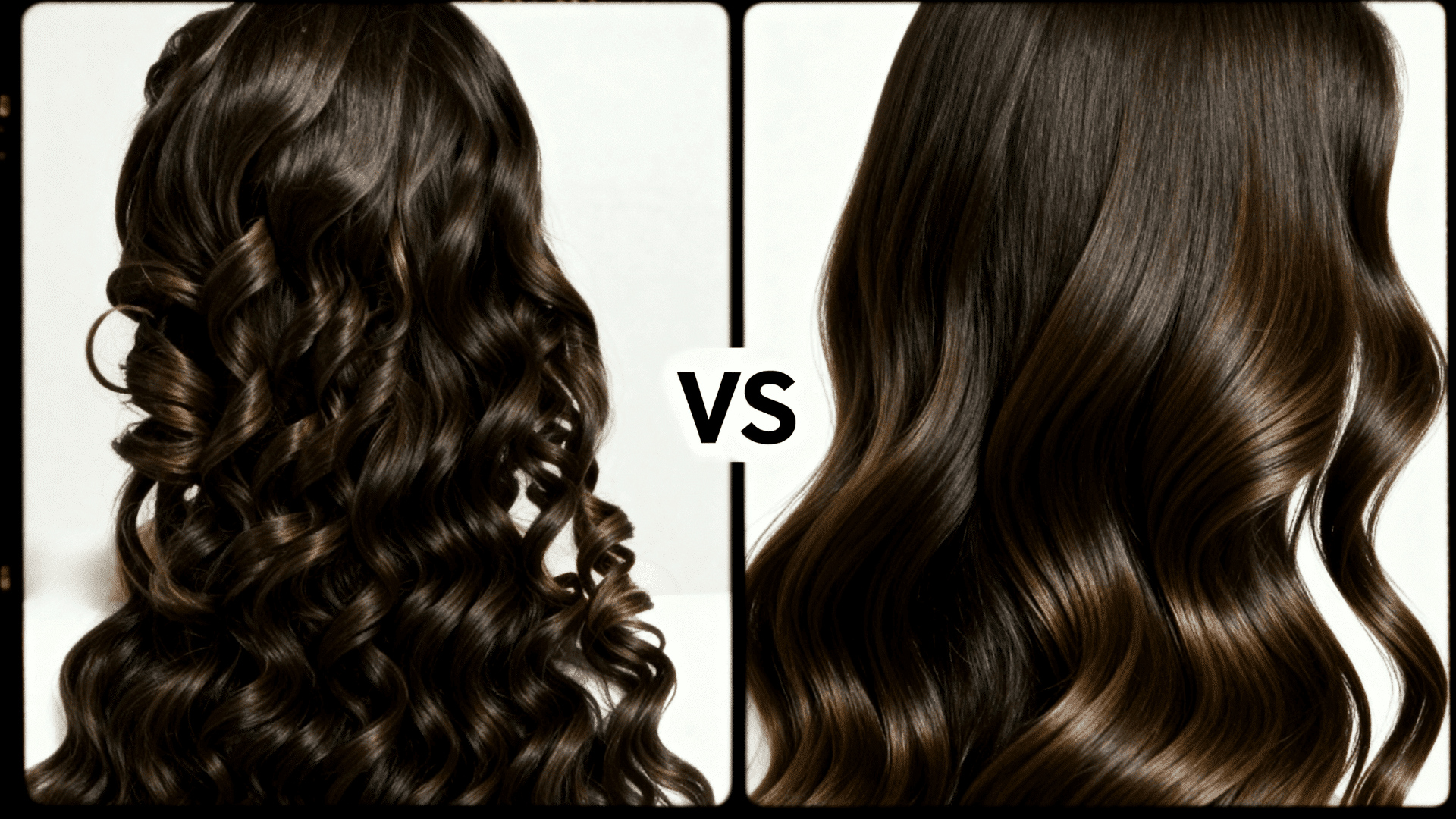
Ever looked at your hair and couldn’t tell if it’s wavy or curly? You’re not alone. Waves flow gently like ocean ripples, while curls twist into tight spirals with serious attitude.
Each type requires specific care and styling to look its best. Mistakes lead to frizz, flatness, and frustration.
The secret to gorgeous hair starts with knowing what you’re actually working with, and what you find might surprise you.
How Hair Type Affects Care and Styling Needs?
Hair type determines everything from how often someone should wash their hair to which products will work best.
The wavy vs curly hair debate matters because wavy hair can handle more frequent washing and lighter products, while curly hair needs intense moisture and heavy styling creams.
Curl pattern affects drying time, frizz, and styling. Waves may respond well to quick mousse, but the same routine could leave curls undefined and dry.
Getting the hair type right means less frustration, fewer bad hair days, and significantly better results from styling efforts.
Understanding Hair Type Classification
The hair typing system provides a universal language for identifying different textures, making shopping for products or finding the right stylist much easier.
When comparing wavy vs curly hair, the system categorizes wavy hair as Type 2 and curly hair as Type 3. Each type breaks down into subcategories that describe specific characteristics, from curl tightness to frizz tendency.
Type 2 Wavy Hair Breakdown
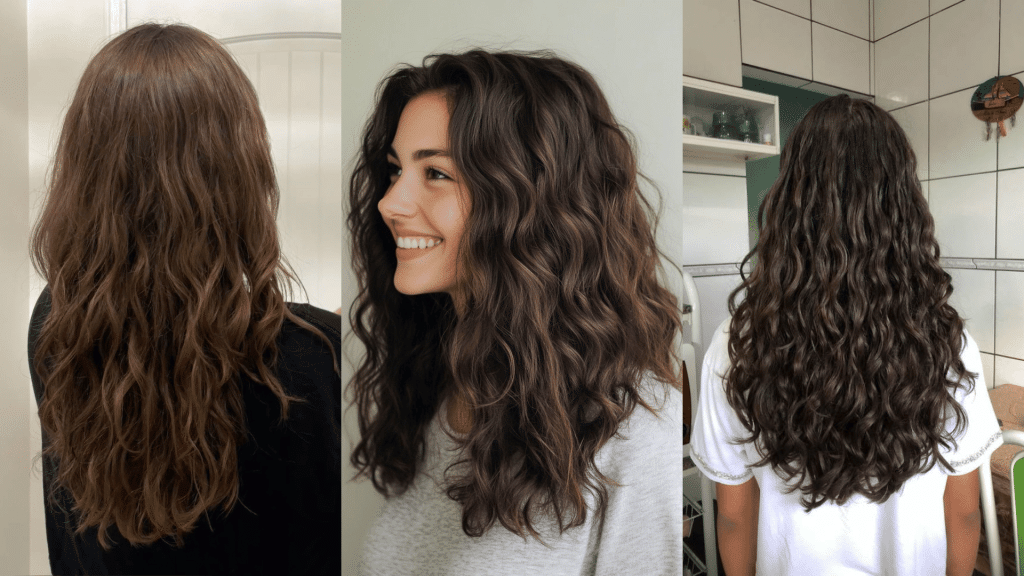
Wavy hair falls between straight and curly textures, forming gentle S-shaped patterns along the hair shaft. It typically has more volume and texture than straight hair but lacks the tight coils found in curly hair types.
The waves form an S-shaped pattern rather than complete spirals, and the texture can vary significantly within this category.
- Type 2A: Features the loosest wave pattern with fine, almost straight hair that shows subtle bends and gets weighed down by heavy products.
- Type 2B: Creates more defined S-shaped patterns starting around mid-length with medium texture that experiences flatness at the crown.
- Type 2C: Produces the most pronounced waves with thick strands waving from the roots down, borders on curly territory.
Type 3 Curly Hair Breakdown
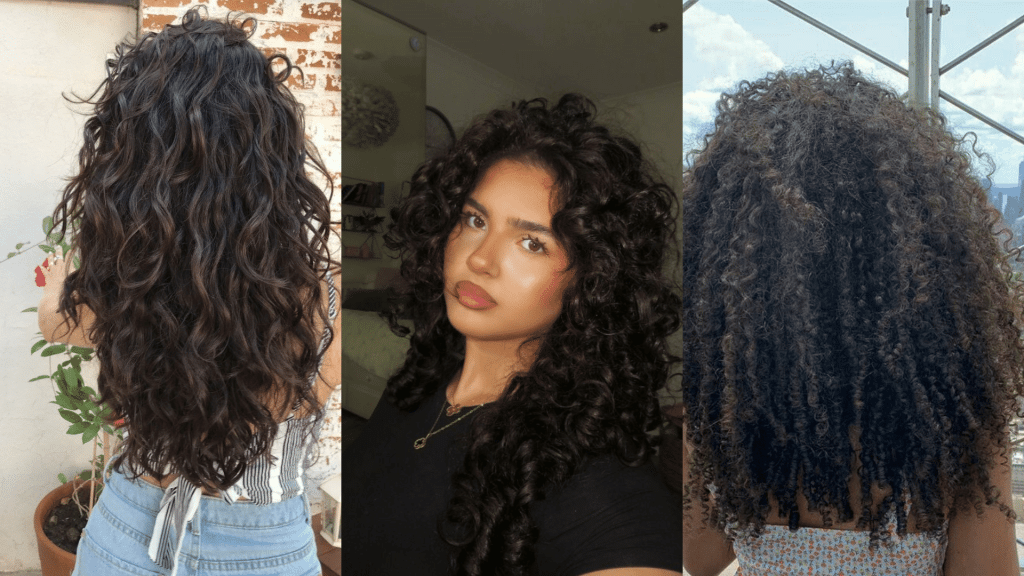
Curly hair features distinct spiral or ringlet patterns that form loops along the hair shaft. Unlike wavy hair, curly textures create well-defined coils that range from loose corkscrews to tight spirals.
Understanding Type 3 hair clarifies that curls form full circles from the scalp, not S-bends, and keep their pattern along the length.
- Type 3A: Creates large, loose spirals about the size of sidewalk chalk with a shiny appearance, and remains the easiest curly type to manage.
- Type 3B: Features medium-sized springy curls sitting between spirals and corkscrews, creating more volume than 3A.
- Type 3C: Produces the tightest corkscrew curls with dense coils, experiences significant shrinkage, making hair appear much shorter.
Difference in Wavy vsCurly Hair
Understanding whether your hair is wavy or curly is the first step to choosing the right products and styling techniques. While both textures fall under the “textured hair” umbrella, their needs are surprisingly different.
| FEATURE | WAVY HAIR | CURLY HAiR |
|---|---|---|
| Texture Feel | Smoother, softer bends | More textured and voluminous |
| Frizz Level | Moderate; increases with humidity | Higher needs more moisture control |
| Moisture Needs | Light hydration; heavy products weigh waves down | High hydration, deep conditioning recommended |
| Drying Methods | Air-dry or light diffusing | Plopping or diffusing on low heat |
Styling Wavy vs Curly Hair

Styling approaches for wavy and curly hair differ because each responds differently to products and techniques. Waves need lightweight hold and volume, while curls require moisture and definition.
Products for Styling Wavy and Curly Hair
Choosing the right products is key because waves and curls respond differently to moisture, weight, and styling hold. Using the wrong formulas can either flatten waves or make curls frizzy and undefined.
| PRODUCT TYPE | WAVY HAIR | CURLY HAIR |
|---|---|---|
| Shampoo | Lightweight, sulfate-free; avoids buildup | Moisturizing, sulfate-free; combats dryness |
| Conditioner | Light hydration; avoid heavy creams | Rich, deep moisture enhances curl softness |
| Leave-ins | Minimal, lightweight formulas | Creamy, nourishing leave-ins |
| Styling | Light mousse, sea-salt spray, soft gels | Curl creams, gels, custards |
| Treatments | Occasional masks | Weekly deep-conditioning |
| Oils | Minimal amounts | Helps seal moisture and reduce frizz |
Styling Wavy Hair
Wavy hair benefits from minimal manipulation and lightweight products that enhance natural S-patterns without weighing it down. Focus on encouraging wave formation and maintaining volume, especially at the roots, where waves often fall flat.
- Apply lightweight products, such as mousse, to damp hair using the scrunching method, squeezing upward to encourage wave formation.
- Use plopping with a t-shirt to enhance definition and reduce frizz without disrupting the wave pattern.
- Unlike curly hair, wavy hair can be brushed when dry without significant damage.
- Combat flat roots with root clipping or diffusing upside down for added volume at the crown.
Styling Curly Hair
Curly hair demands more intensive styling techniques that focus on moisture retention and curl definition from root to tip. The goal is to maintain the natural spiral pattern while preventing frizz and breakage through careful handling.
- Distribute heavy creams and gels through wet hair using the praying hands method or raking technique to maintain the curl pattern.
- Use finger coiling on individual curls for maximum definition and pinning at night to preserve curls.
- Never brush curly hair when dry, as this causes frizz; only detangle with a wide-tooth comb when wet.
- Diffuse carefully with low heat to avoid disturbing the natural spiral formation and maintain curl integrity.
Maintenance Tips for Wavy Hair
Wavy hair needs balanced care to enhance texture without weighing down the pattern. Follow these tips to maintain bouncy, defined waves.
- Wash Moderately: Shampoo 2-3 times per week with lightweight, sulfate-free products.
- Condition Mid-Lengths: Apply conditioner from ears down to avoid greasy roots.
- Scrunch While Drying: Use a microfiber towel or a t-shirt to scrunch out water gently.
- Use Lightweight Products: Apply mousse or light gel to damp hair for hold without heaviness.
- Air-Dry or Diffuse: Let waves form naturally or use a diffuser on medium heat.
- Sleep on Silk: Use a silk or satin pillowcase to prevent frizz and maintain the wave pattern.
- Trim Every 8-10 Weeks: Regular cuts prevent split ends and keep waves shapely.
Maintenance Tips for Curly Hair
Curly hair requires intensive moisture and gentle handling to maintain definition and prevent frizz. These tips keep curls healthy and bouncy.
- Wash Less Frequently: Limit shampooing to 1-2 times per week with sulfate-free cleansers.
- Deep Condition Weekly: Use intensive moisture treatments every 5-7 days.
- Detangle When Wet: Apply a generous amount of conditioner and use fingers or a wide-tooth comb only when soaking wet.
- Apply Rich Products: Use leave-in conditioner and curl cream on damp hair for maximum moisture.
- Plop or Diffuse: Wrap in a t-shirt to set curls or use a diffuser on low heat.
- Protective Sleep: Use a silk/satin pillowcase, or the pineapple method, to preserve your curl pattern overnight.
- Avoid Heat: Air-dry whenever possible to prevent damage and dryness.
- Trim Every 10-12 Weeks: Regular cuts remove damage and maintain curl shape.
What If You Have Both Waves and Curls?
Many individuals have mixed hair textures, with both wavy and curly patterns appearing throughout their hair. This is entirely normal and quite common.
Typically, the hair underneath or at the nape of the neck may be curlier, while the top layers remain wavy. When dealing with this combination, the curly vs wavy hair debate becomes less about choosing one approach and more about adapting care routines to accommodate both textures.
The best strategy is to use lightweight, curl-enhancing products that define curls without weighing down waves.
Layered haircuts work particularly well for mixed textures, allowing each section to form its natural pattern while maintaining overall balance and shape.
Wrapping It Up
Now you know the fundamental differences between wavy and curly hair, from texture to porosity. Understanding your specific type unlocks the right products and techniques that actually work.
Stop guessing and start treating your strands with the care they deserve. If you’ve got loose waves or tight ringlets, the path to healthier hair is clear.
Ready to decode yours? Start experimenting with targeted methods today and watch your hair change.