Business casual attire: men find it confusing, sitting in that frustrating gray area between suits and jeans. Too formal, and you look overdressed. Too casual, and you seem unprofessional.
Business casual confuses most men, but the difference between looking sharp and looking lost is simpler than you think.
From picking the right pants to choosing appropriate shoes, mastering business casual opens professional doors. The secret? Knowing which pieces actually belong in your work wardrobe.
What is Business Casual Attire for Men?
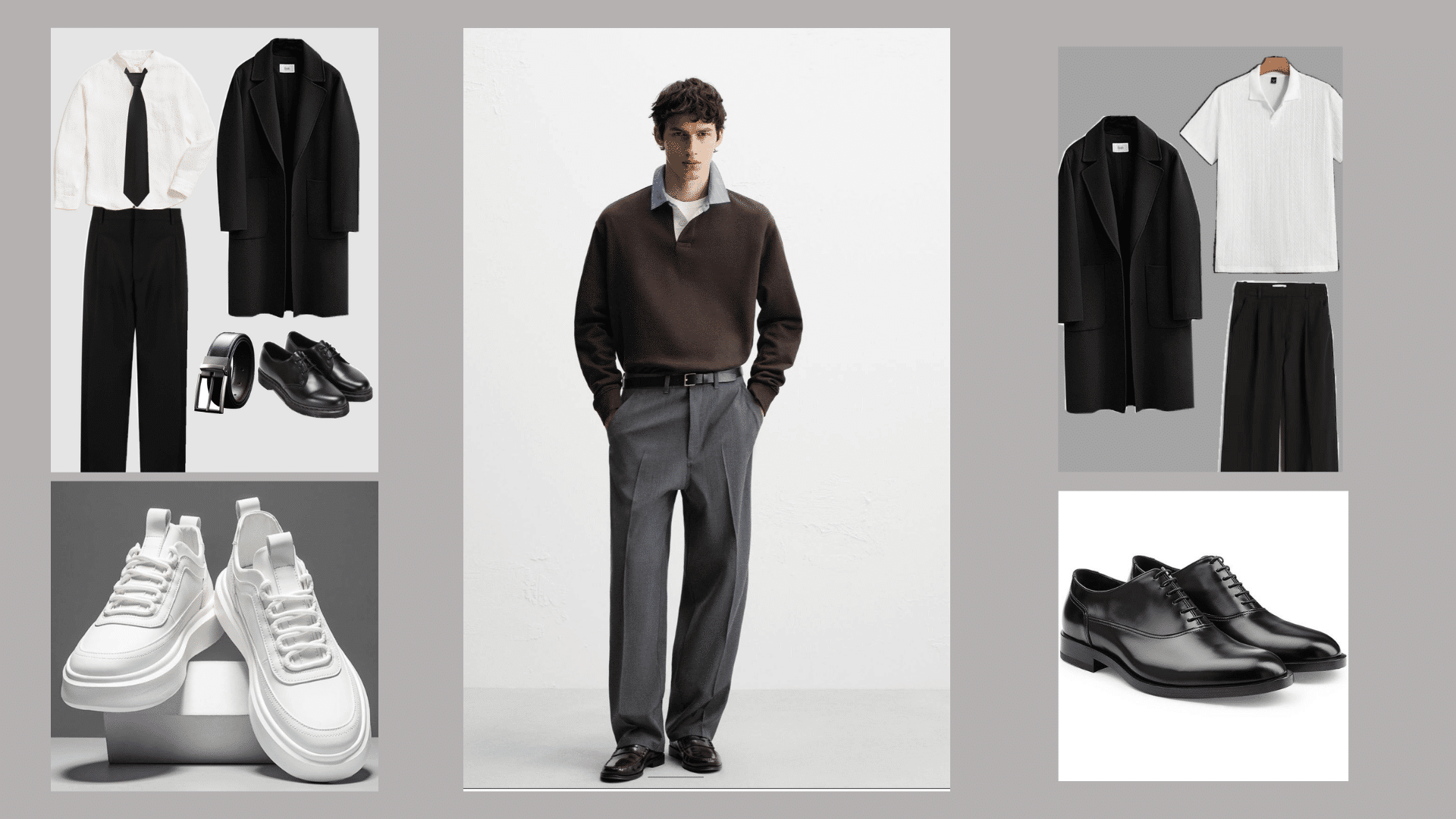
Men’s casual attire sits comfortably between formal business wear and weekend clothes. It skips the full suit-and-tie but maintains a professional appearance with well-fitting pieces like chinos, button-down shirts, and blazers.
The dress code lets men appear polished without strict corporate attire. A typical outfit includes dress pants or khakis, a collared shirt, and leather shoes. Blazers are optional, but they add polish.
The key difference from a business professional is simple. Business casual ditches the matching suit jacket and pants, giving men freedom to mix colors and textures while staying workplace-appropriate.
From Rebels to Modern Offices
Business casual started as a rebellious idea in the 1960s in Hawaii, when fashion retailers launched “Casual Friday” to boost shirt sales.
The concept spread slowly until Silicon Valley tech companies embraced it in the 1990s, trading rigid suits for khakis and button-downs.
Levi’s played a pivotal role by sending business-casual style inspo to over 25,000 HR departments, thereby defining the dress code. Their Dockers campaign showed corporate America that professional didn’t have to mean uncomfortable.
The pandemic changed everything. Remote work normalized comfort, and when employees returned to offices, sweatpants energy came with them.
Today’s business casual attire for men reflects that shift, blending professionalism with the ease everyone got used to at home.
Components of Business Casual Attire for Men
Business casual attire for men works best when each piece contributes to a clean, polished, and confident appearance. Every item should enhance the overall balance of relaxed and professional style.
| COMPONENT | OPTIONS | STYLE IMPACT |
|---|---|---|
| Shirts | Button-downs, polos, knitwear | Creates a clean, structured upper half that sets a professional the. |
| Pants | Chinos, dress trousers, dark jeans | Shapes the overall silhouette and determines how formal or relaxed the outfit feels. |
| Jackets | Blazers, sport coats, light layers | Instantly fixes the outfit and adds authority without feeling too formal. |
| Shoes | Loafers, derbies, dress boots, clean minimal sneakers | Anchors the look and signals your style’s polish or casualness. |
| Accessories | Belts, simple watches, leather bags | Provides subtle refinement and completes the outfit with intentional detail. |
Building the Perfect Business Casual Wardrobe
Creating a diverse business casual wardrobe doesn’t require filling an entire closet. Wise choices in key categories make getting dressed easy while keeping every outfit sharp and office-ready.
1. The Right Shirts
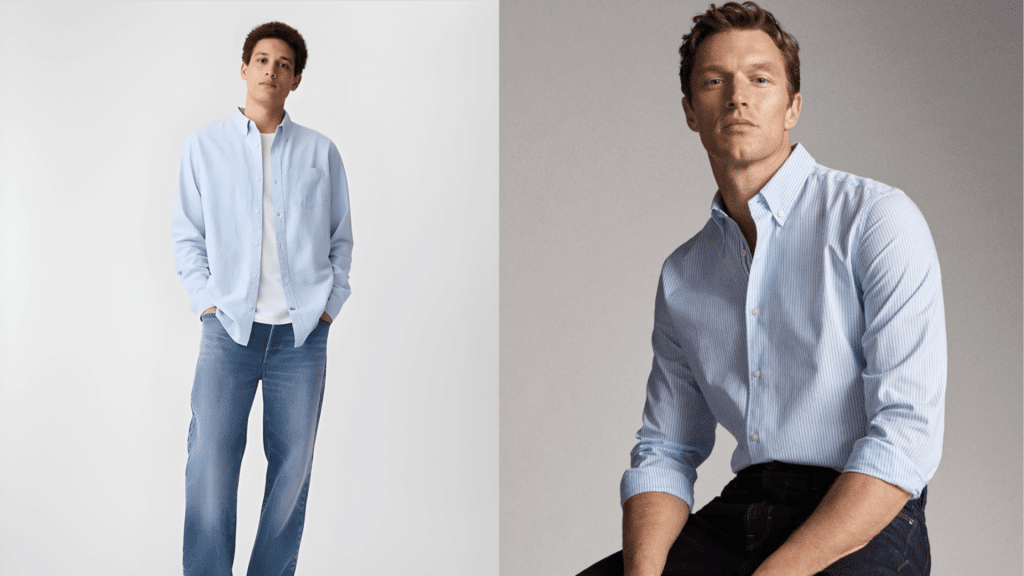
The Oxford button-down remains the backbone of any business casual rotation. Starting with white and light blue creates a foundation that pairs with virtually everything.
Chambray shirts add texture without pattern, while quality polo shirts work for warmer days or casual Fridays.
- Fabric Options: Cotton Oxford, chambray, linen (summer), fine-knit polos
- Color Choices: White, light blue, chambray blue, pale pink, subtle patterns
- Seasonal Use: Cotton year-round, linen for spring/summer, flannel for fall/winter
2. FormalPants
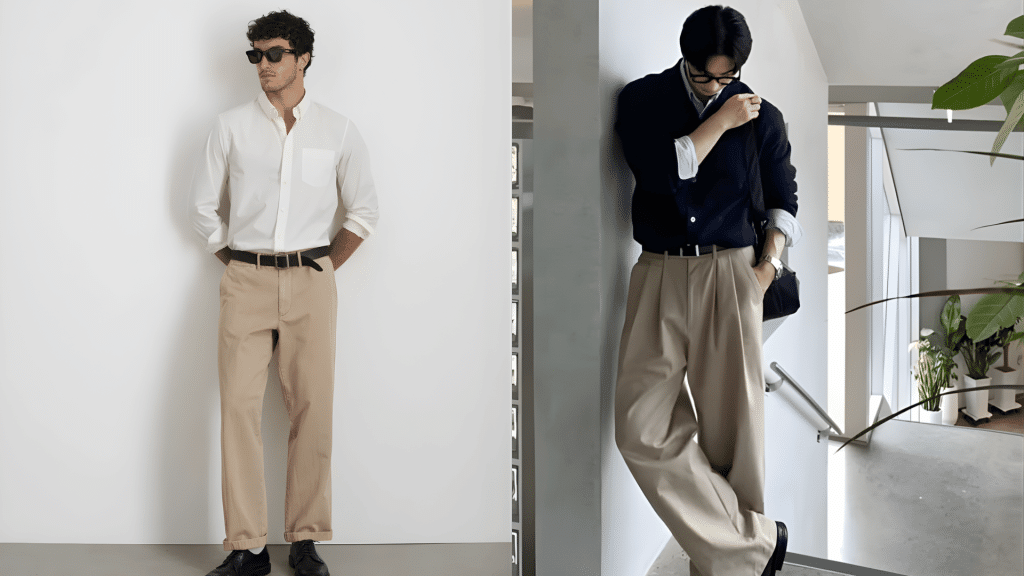
Chinos deserve their reputation as the business casual staple because they’re comfortable like jeans but polished like dress pants.
Dress slacks in wool blends make the look better when situations call for extra polish. Dark jeans have earned their place in modern business casual, but only when they’re dark wash without distressing and paired with structured pieces.
- Fabric Options: Cotton twill, wool blends, tropical wool (summer), dark denim
- Color Choices: Navy, grey, khaki, olive, charcoal, dark indigo (jeans)
- Seasonal Use: Lightweight cotton for summer, wool for fall/winter, year-round chinos
3. Blazers and Sport Coats
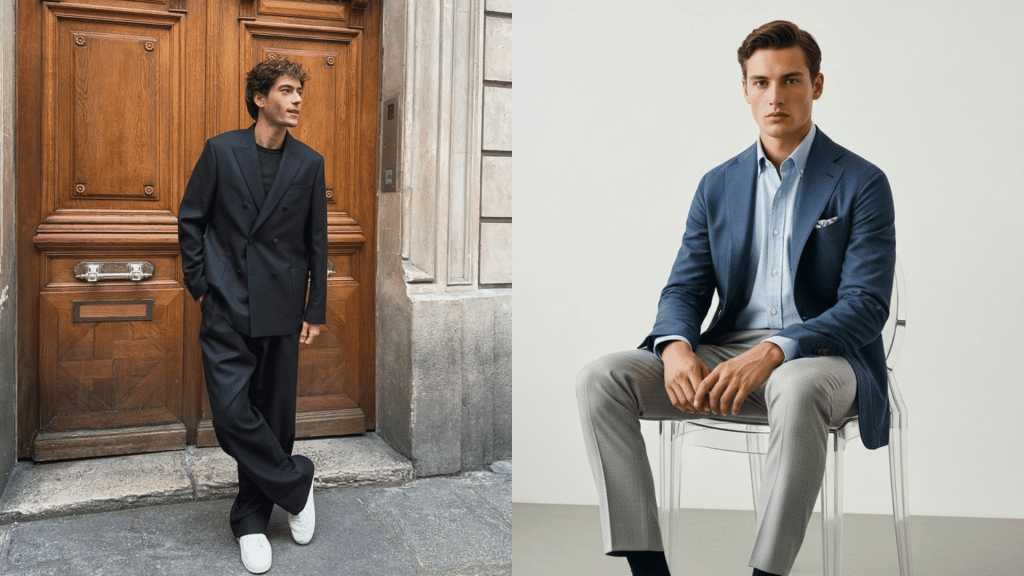
A navy blazer changes any business casual outfit from decent to distinguished, pairing with jeans for casual Friday or grey trousers for client meetings. Grey sport coats offer similar flexibility with a softer vibe.
Texture adds interest without pattern, so consider herringbone, hopsack, or subtle windowpane checks once the basics are covered.
- Fabric Options: Wool, cotton, linen blends, hopsack weave, herringbone
- Color Choices: Navy, grey, brown, tan, charcoal
- Seasonal Use: Lightweight cotton/linen for spring/summer, wool for fall/winter
4. Footwear Options
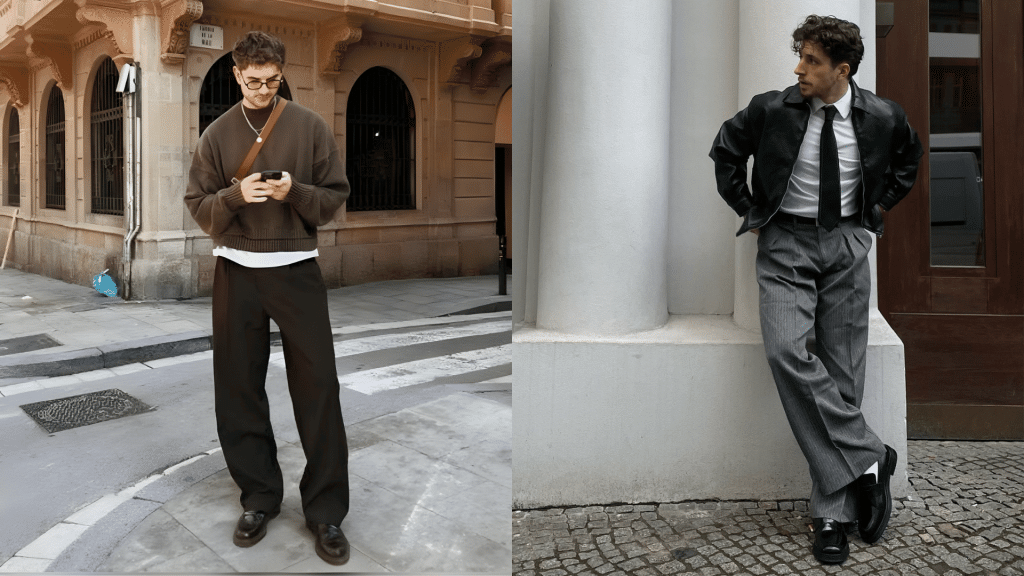
Leather dress shoes remain the gold standard for men’s business casual attire, with brown offering greater versatility than black.
Loafers simplify getting dressed and look equally sharp with chinos or dress pants. Chelsea boots and chukka boots bridge seasons beautifully, transitioning from fall through spring with ease.
- Fabric Options: Full-grain leather, suede (casual), polished calfskin
- Color Choices: Brown (tan to dark), black, burgundy, navy suede
- Seasonal Use: Leather year-round, suede for fall/spring, avoid in wet weather
5. Different Accessories
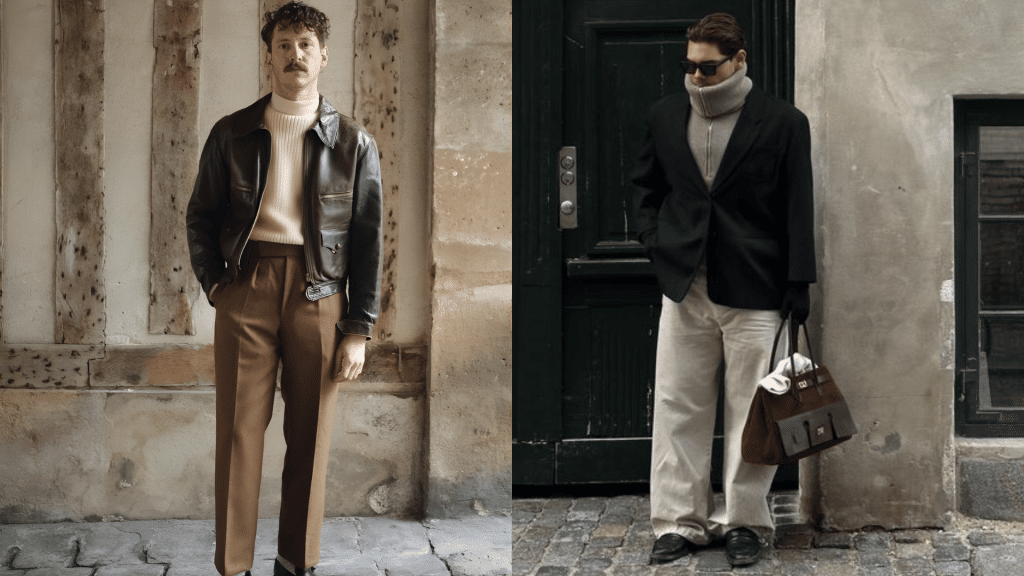
A leather belt should match the shoe color, creating visual cohesion from waist to floor. Watches add a finish without effort, with leather straps leaning dressier, while metal bracelets offer versatility.
A leather briefcase or structured messenger bag looks infinitely more professional than a backpack, though quality backpacks in leather or waxed canvas can work in casual offices.
- Fabric Options: Full-grain leather belts, leather/metal watch straps, leather bags
- Color Choices: Brown and black belts, watch metals in silver/gold, bag in brown/black
- Seasonal Use: Leather accessories work year-round; adjust watch straps seasonally.
Business Casual Looks for Different Scenarios
Different situations require varying approaches to men’s business casual attire. Adjusting formality within dress codes makes professional dressing effortless.
1. The Standard Office Day
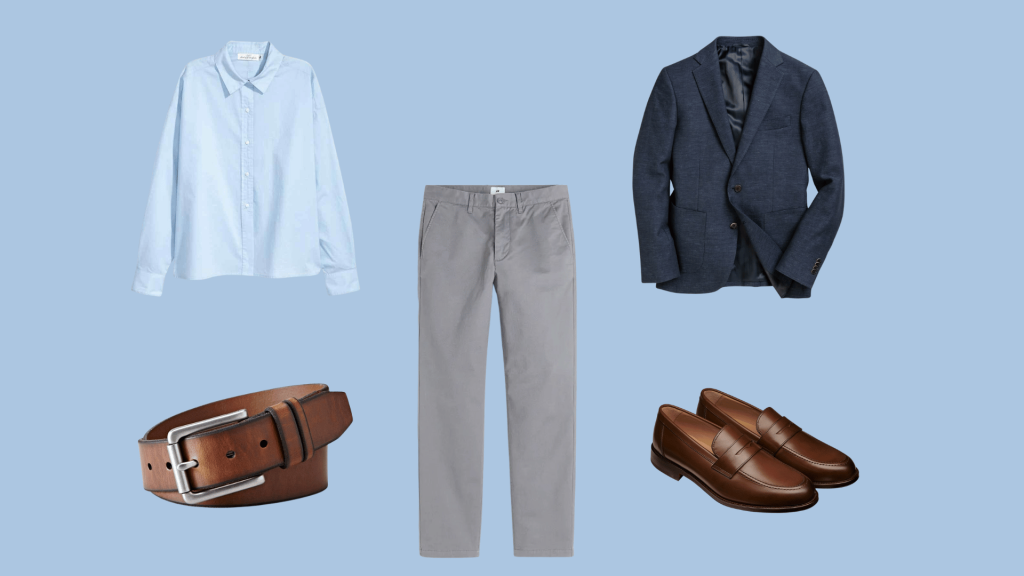
Grey chinos paired with a light-blue Oxford and brown leather loafers create the baseline business-casual look that works anywhere. Adding a navy blazer changes it instantly when unexpected meetings pop up.
The belt matches the shoes, and a simple watch completes the look effortlessly. This business casual style, favored by men, balances friendliness and professionalism, making it their top choice throughout the week.
2. Important Client Meetings
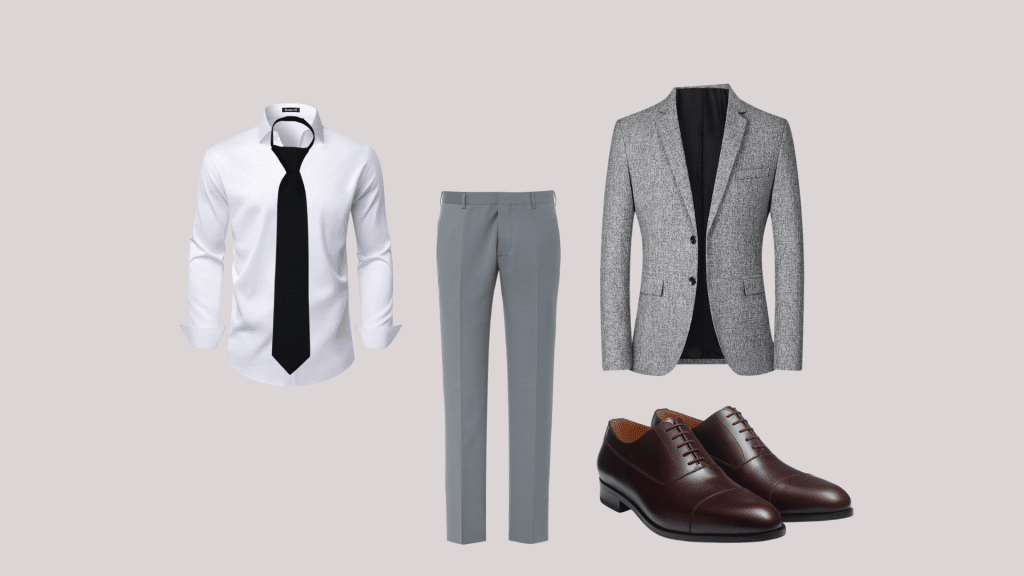
Dress slacks in charcoal or navy signal seriousness while maintaining business casual parameters. A crisp white dress shirt under a well-fitted blazer brings polish that clients notice and appreciate.
Leather oxfords in dark brown or black ground the look with authority. A tie becomes optional but available, tucked in a pocket in case the meeting demands extra formality.
3. The Job Interview Fit
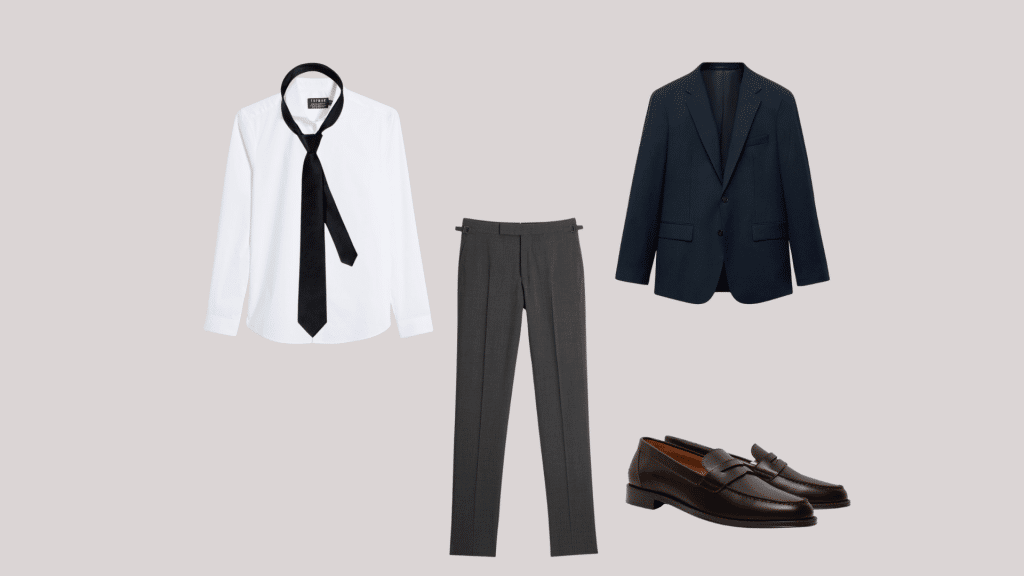
Business casual attire for men at interviews leans heavily toward the business side of the spectrum. Dark wool trousers, a pressed button-down in white or light blue, and a navy blazer show respect for the opportunity.
Polished leather dress shoes are non-negotiable, and adding a conservative tie demonstrates attention to professional standards.
4. Business Lunch or Dinner
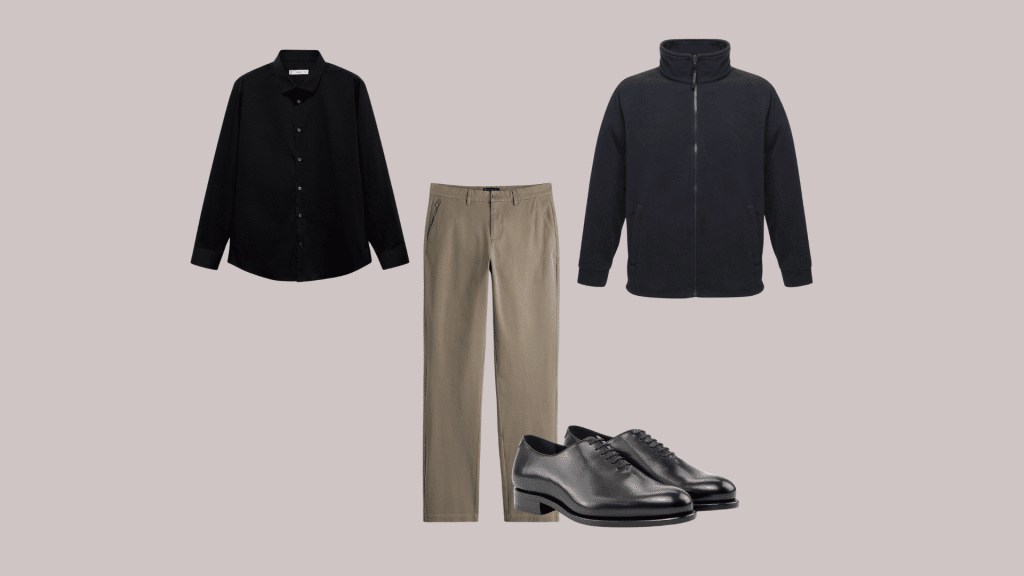
The restaurant’s formality level makes the outfit choice apt for the actual business meetings. Upscale dining calls for dress pants, a blazer, and leather dress shoes at a minimum.
Casual spots allow chinos with a button-down shirt worn sans jacket, though keeping a blazer nearby also works. The goal remains to look put-together enough that focus stays on conversation rather than on questioning wardrobe choices.
5. Casual Friday Fit
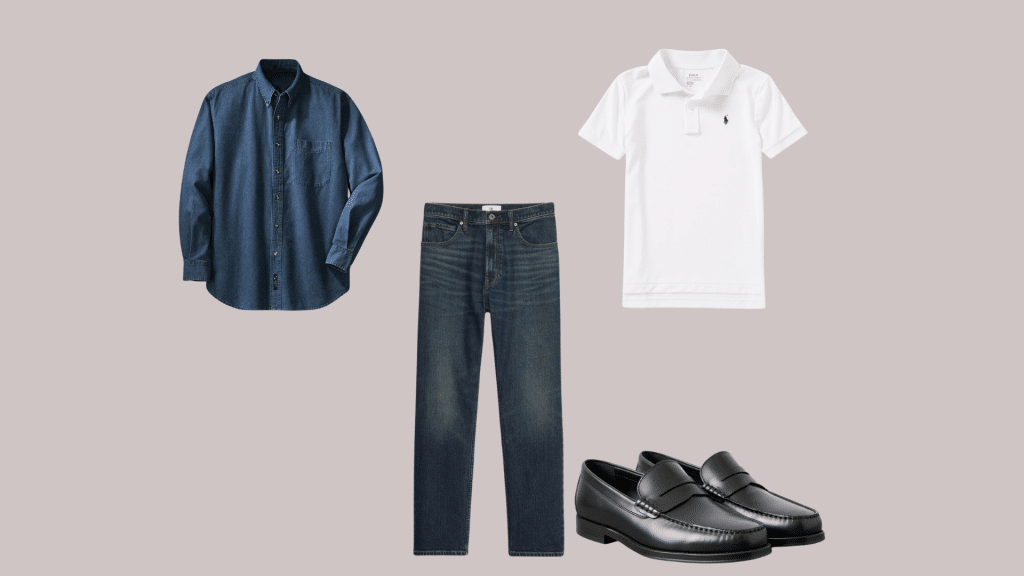
Dark wash jeans replace dress pants, but everything else remains structured and polished. A chambray shirt or quality polo under an unstructured blazer keeps things relaxed yet intentional.
Loafers or clean leather sneakers are better than dress shoes for a Friday balance. Casual Friday is still business casual; men can relax slightly, not weekend casual, so the look should photograph well if clients show up unexpectedly.
6. Virtual Meetings and Video Calls
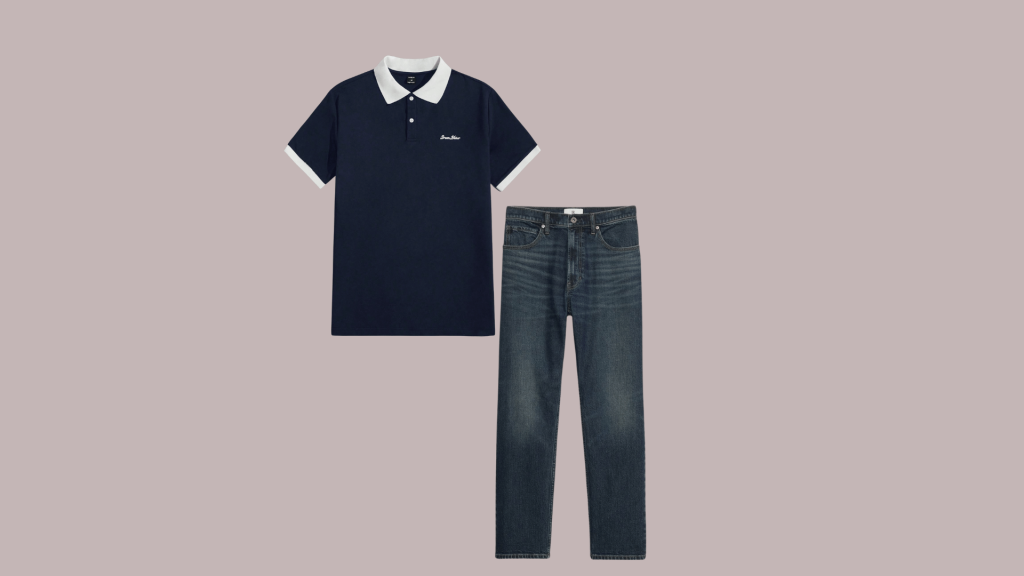
The camera captures from chest up, making the top half crucial while the bottom half’s flexibility increases. A well-fitted button-down or polo in solid colors photographs better than patterns that create visual noise on screen.
Good lighting matters as much as clothing, and sitting against a clean background keeps attention on the speaker. Blazers add instant credibility on video, but aren’t always necessary for internal team calls.
7. Networking Events and Mixers
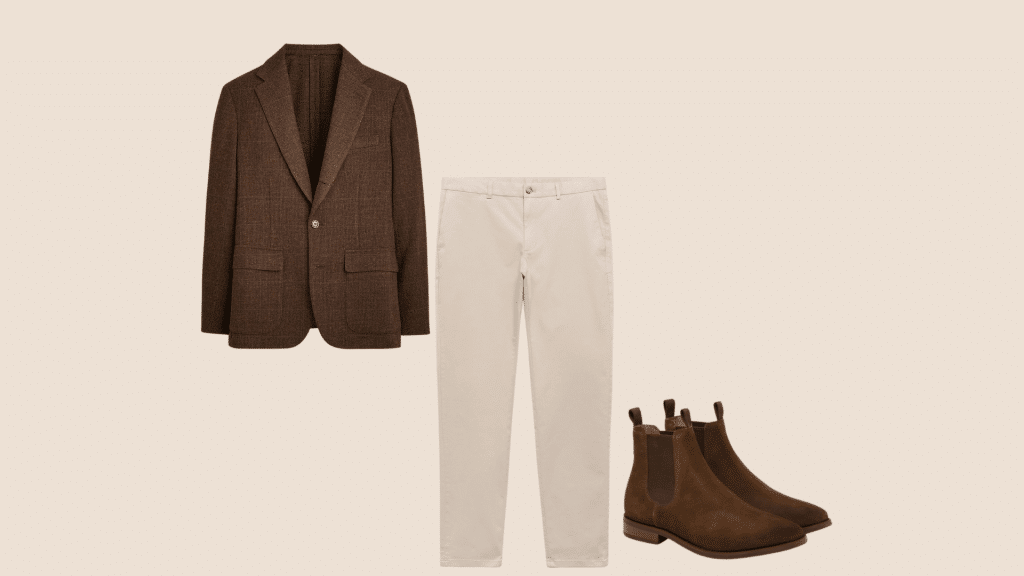
After-hours professional gatherings allow slightly more personality while maintaining business casual standards. A sport coat with an interesting texture, like herringbone, paired with chinos creates an approachable sense of grace.
Swapping dress shoes for suede loafers or Chelsea boots adds a contemporary edge without crossing into casual territory. The outfit should facilitate conversation by looking polished but not stuffy, signaling openness to connection.
Common Mistakes to Avoid
Even men who grasp business casual basics can make subtle missteps that weaken a good outfit. Avoiding these errors keeps the look sharp and workplace-appropriate.
- Wearing ill-fitting clothes with oversized shoulders or baggy pants
- Choosing athletic shoes or sandals instead of leather dress shoes
- Wearing wrinkled clothing
- Over-accessorizing with chunky jewelry or novelty pieces
- Mixing formality levels (dress shirts with jeans, suits with sneakers)
- Showing ankle gaps between pants and shoes
- Misjudging company culture and dress code
Wrapping It Up
Mastering the business casual attire for men’s success comes down to building a solid foundation. Start with well-fitting chinos, dress shirts, and quality shoes.
Add blazers and sweaters, avoid sneakers and hoodies, and when in doubt, dress more formally with clean, pressed clothing.
Start with three dress shirts, two chinos, and one blazer to build a professional wardrobe that boosts your workplace credibility.