
Linen has a reputation. People see those deep, stubborn wrinkles and assume the fabric is impossible to deal with.
Linen actually handles heat and steam better than most fabrics ever will.
Getting crisp, smooth linen is easier than most people expect. The right heat, a little steam, and the correct technique are all it takes.
Why Does Linen Wrinkle So Much?
Linen is made from the flax plant, and its fibers are stiff with almost no stretch. That’s why it creases so easily.
The fabric is also built from cellulose, a natural material that reacts strongly to water. When moisture sneaks into the fibers, it breaks tiny chemical bonds and then reforms them in a new position.
The result? Wrinkles. The good news: with the right technique, they’re easy to fix.
Can You Iron Linen?
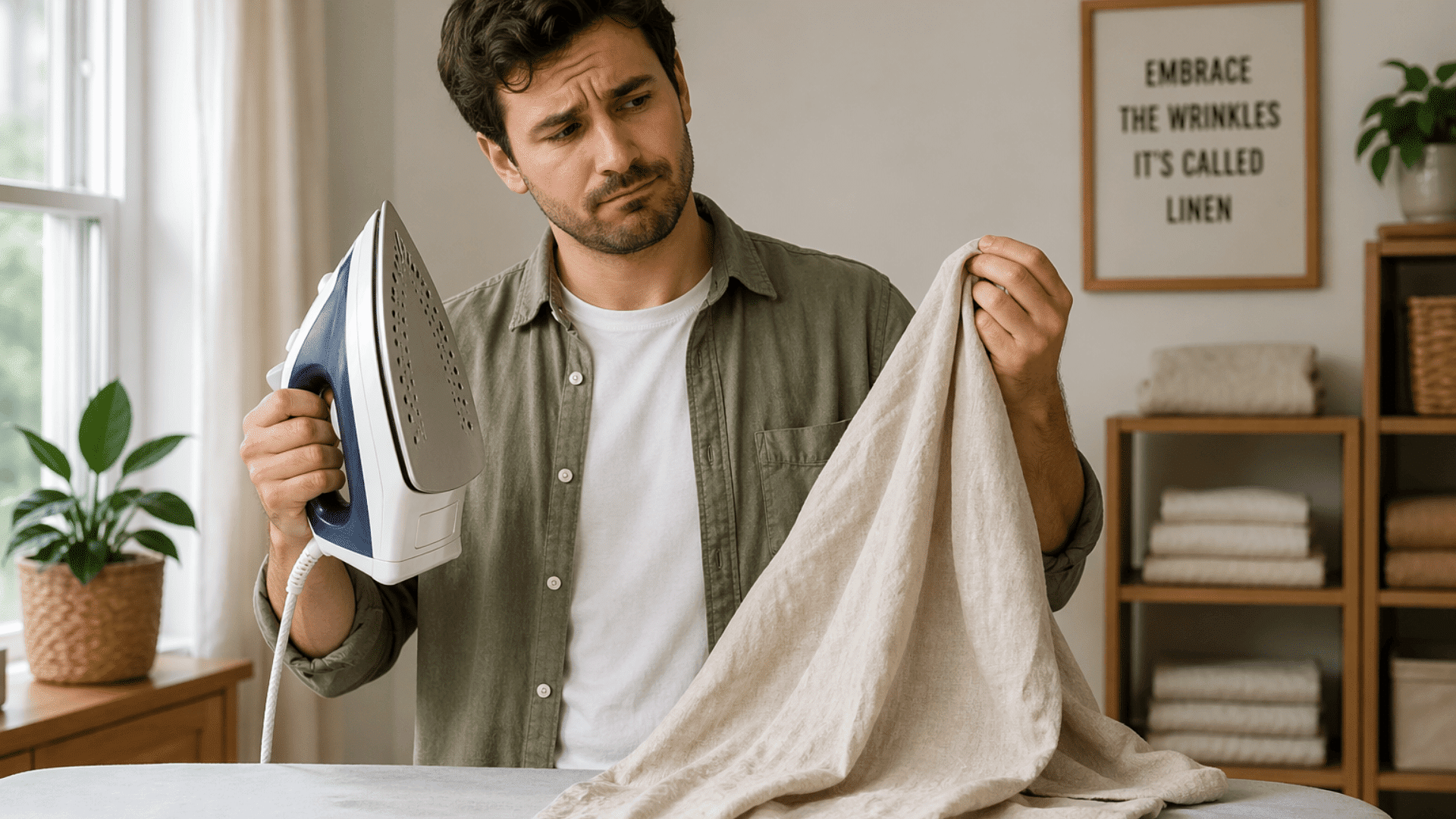
Yes. Linen is one of the toughest natural fabrics out there, so it handles high heat well. Set your iron to the linen or high setting, use steam, and you are good to go.
The real trick is ironing while the fabric is still slightly damp. That is when wrinkles release the easiest.
Should you bother? That depends. Some people love the crisp, polished look. Others prefer linen’s natural, relaxed wrinkles. Both are valid.
Pro tip: Iron linen while damp on a high heat setting for the smoothest results every time.
What You Need Before You Start: Tools Checklist
Before you begin learning how to iron linen, having the right tools makes the process easier and safer. Linen responds best to heat with moisture, so a basic setup helps remove wrinkles without damaging the fabric.
| TOOLS | WHY YOU NEED IT | PRO TIP |
|---|---|---|
| Steam Iron | Smooths wrinkles using heat and steam | Use medium to high heat with steam |
| Fabric Steamer | Removes wrinkles without direct contact | Best for delicate linen |
| Handheld Steamer | Quick and portable wrinkle removal | Use on hanging clothes |
| Spray Bottle | Adds moisture to stubborn creases | Lightly mist before ironing |
| Ironing Board | Provides a flat, stable surface | Use a padded board |
| Pressing Cloth | Protects fabric from heat damage | Use for dark or delicate linen |
How to Iron Linen: Step-by-Step Guide
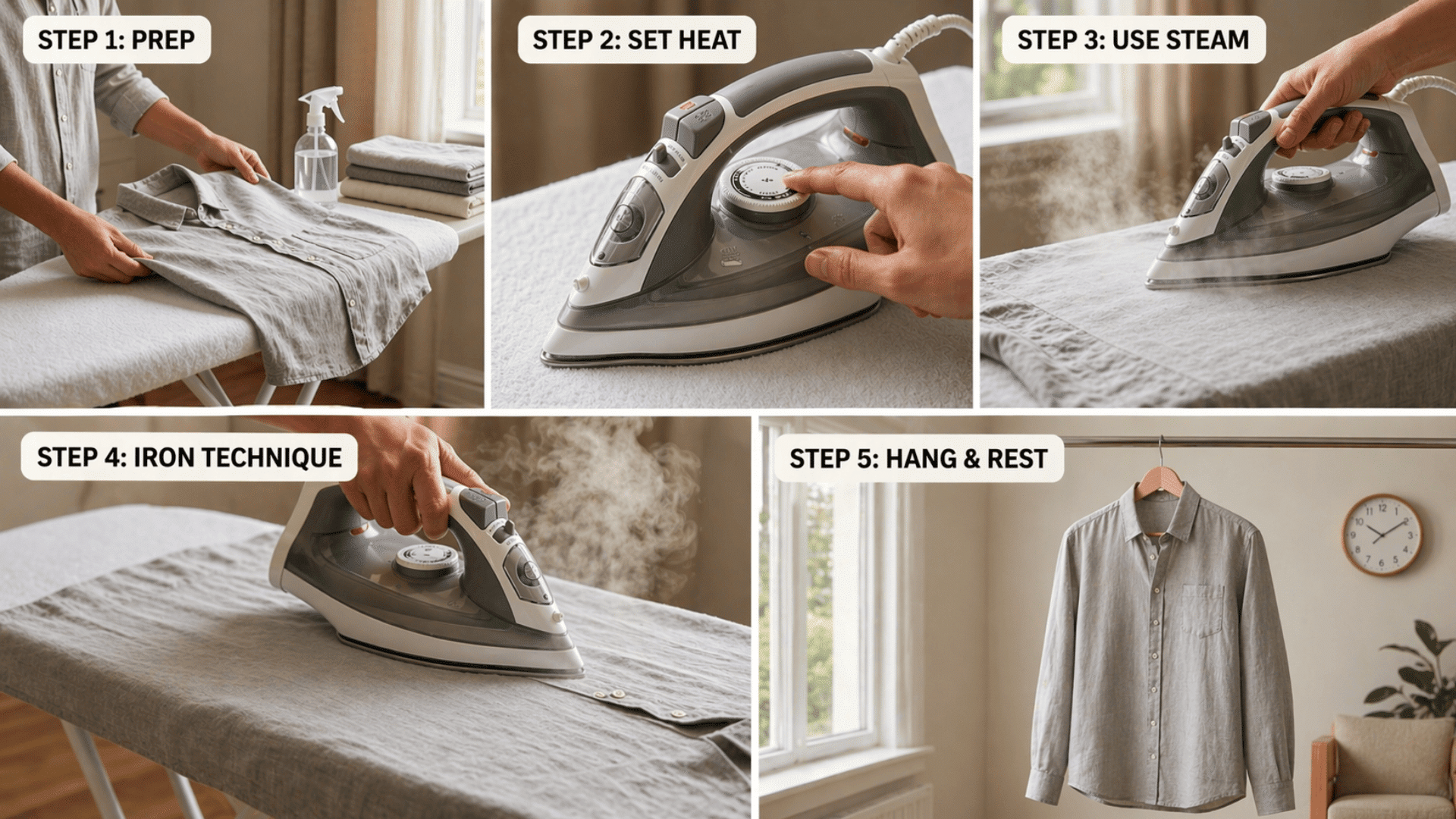
Ironing linen is easier than most people think. Follow these five simple steps, and you will get smooth, crisp results every single time.
Step 1: Prep Your Linen and Board
Getting set up the right way makes everything easier. Wash your linen first, then iron it while it’s still slightly damp.
Remember to keep your ironing board clean, or you can simply lay a soft terry cloth on it to protect your fabrics. It’s a small step that makes a big difference!
Step 2: Set the Right Heat
The wrong heat setting can leave linen looking flat and lifeless. Use the linen setting or the highest heat option on your iron.
Linen responds best to high heat to help it release wrinkles smoothly, so a warm iron usually does the trick!
Step 3: Use Steam
Steam is your best friend when ironing linen. Turn on your iron’s steam function if it has one. No steam? Spritz the fabric with a spray bottle as you go.
Remember, keeping moisture balanced is so important! It really makes a difference.
Step 4: Iron With the Right Technique
How you move the iron matters just as much as the heat. Flip your linen inside out to avoid shine marks. Press down firmly and lift the iron rather than dragging it.
Take your time with gentle, flowing strokes, and be sure to give a little extra care to hems, edges, and seams. Your attention to detail will really make a difference!
Step 5: Hang and Let It Rest
The last step is one most people skip, but it makes a real difference. Hang your linen in a cool, dry spot right after ironing.
Please wait around 15 minutes before putting it on. Wearing damp linen can cause new creases to form.
How to Iron Specific Linen Garments
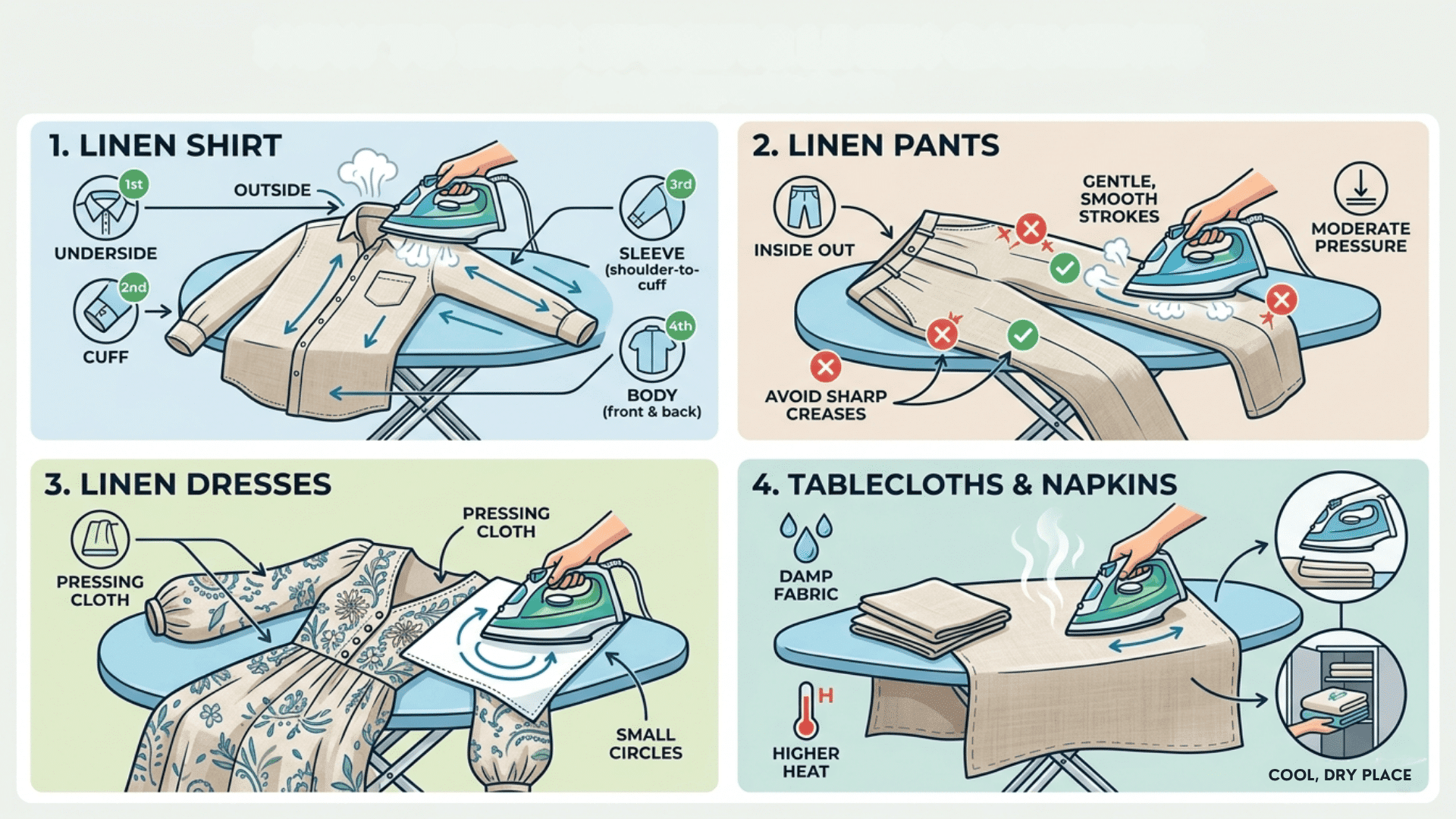
Not all linen pieces iron the same way. Here is a quick guide for the most common garments so you get the best results every time.
1. How to Iron a Linen Shirt
Shirts have more detail than most linen pieces, so a set order saves time and effort. Always start with the collar, doing the underside first and then the outside.
Move to the cuffs, then the sleeves from shoulder to cuff, and finish with the front and back of the shirt.
2. How to Iron Linen Pants
Pants are straightforward but easy to get wrong if you rush the process. Turn your pants inside out before you start ironing.
Try using gentle, smooth strokes and be careful not to press too hard, so you don’t create any unwanted sharp creases.
3. How to Iron Linen Dresses
Dresses need a little extra care around decorative details and delicate sections. Lay the dress flat on the ironing board and place a pressing cloth over any decorative details.
Gently move the iron in small circles to smooth the fabric carefully, making sure not to damage it.
4. How to Iron Linen Tablecloths and Napkins
Iron table linens while still damp and use higher heat for stubborn wrinkles, as they are thicker and wider than clothing.
First, iron both sides of the item, and then store it folded in a cool, dry place to keep it in great shape.
Common Mistakes to Avoid When Ironing Linen
Even with the best iron and the right heat setting, small mistakes can ruin your results. Avoid these five common errors and your linen will come out smooth and damage-free every time.
- Ironing dry line: Always iron linen while it is still slightly damp. Dry fabric holds wrinkles much more stubbornly, making the whole job harder.
- Ironing on the outer side: Always flip your linen inside out before ironing. Ironing directly on the right side causes shine marks that are difficult to remove.
- Leaving the iron stationary: Linen can handle high heat, but a stationary iron will scorch the fabric or cause yellowing. Keep the iron moving at all times.
- Skipping a pressing cloth on delicate pieces: Decorative details and fine linen need an extra layer of protection. A simple pressing cloth between the iron and fabric does the job.
- Not hanging linen immediately after ironing: Linen wrinkles fast. Hang it straight away in a cool, dry place and give it at least 15 minutes before wearing or storing.
Alternatives to Ironing Linen
If you want to skip ironing linen altogether, there are easier ways to manage wrinkles. While these methods may not give a crisp finish, they significantly reduce creases with less effort and time.
| METHOD | HOW IT HELPS | PRO TIP |
|---|---|---|
| Fabric Steamer | Smooths wrinkles without direct contact | Great for quick touch-ups |
| Smart Drying | Reduces wrinkles during the wash and dry cycle | Remove promptly, tumble briefly, then hang |
| Air Drying | Prevents deep creases from setting in | Let the linen dry fully before wearing |
| Embrace Wrinkles | Keeps linen’s natural, relaxed texture | Works well for casual looks |
Wrapping It Up
So now you know the answer to can you iron linen is a confident yes. The fabric is tougher than it looks and rewards a little know-how with seriously smooth results.
Set your iron to high, add some steam, and watch those wrinkles disappear.
Once you try it the right way, you will never dread wrinkled linen again. Got questions? Drop them in the comments below.
Frequently Asked Quetsions(FAQ)
Why Does Linen Wrinkle So Easily?
Linen wrinkles easily because its fibers are stiff and lack elasticity. Moisture reshapes the fiber structure, causing creases to form but also making them easier to smooth out with heat.
What Is The Best Way To Iron Linen For Smooth Results?
For best results, iron linen while it is slightly damp using high heat and steam. Press and lift the iron instead of dragging it, and work on the reverse side to prevent shine.
Can You Remove Linen Wrinkles Without Ironing?
Yes, you can reduce wrinkles using steamers, proper air drying, or a quick tumble dry. These methods are faster, though they may not give the same crisp finish as ironing.
What Temperature Is Best For Ironing Linen?
Use a high heat or linen setting with steam. This helps remove wrinkles quickly without damaging the fabric.