

Laptop open, coffee in hand, and absolutely no idea what day of the week it is because, honestly, it does not matter anymore.
Welcome to the digital nomad lifestyle, where your office has a view, and your work lives online.
It might sound like a made-up idea to shame nine-to-five workers, but it is a real lifestyle welcomed by an increasing number of people. And no, that rise is not a coincidence.
What is the Digital Nomad Lifestyle?
The digital nomad lifestyle is a way of living in which you work remotely while traveling or staying in different places, rather than being tied to one office or city.
Digital nomads usually earn online through remote jobs, freelancing, or running a business, and they choose locations based on factors such as cost of living, internet quality, and lifestyle.
It sounds exciting, and it can be, but it also requires discipline, planning, and the ability to balance work with constant change. In short, it is not a permanent vacation.
It is a flexible lifestyle built around freedom, responsibility, and smart choices.
Why More People Are Choosing the Digital Nomad Lifestyle?
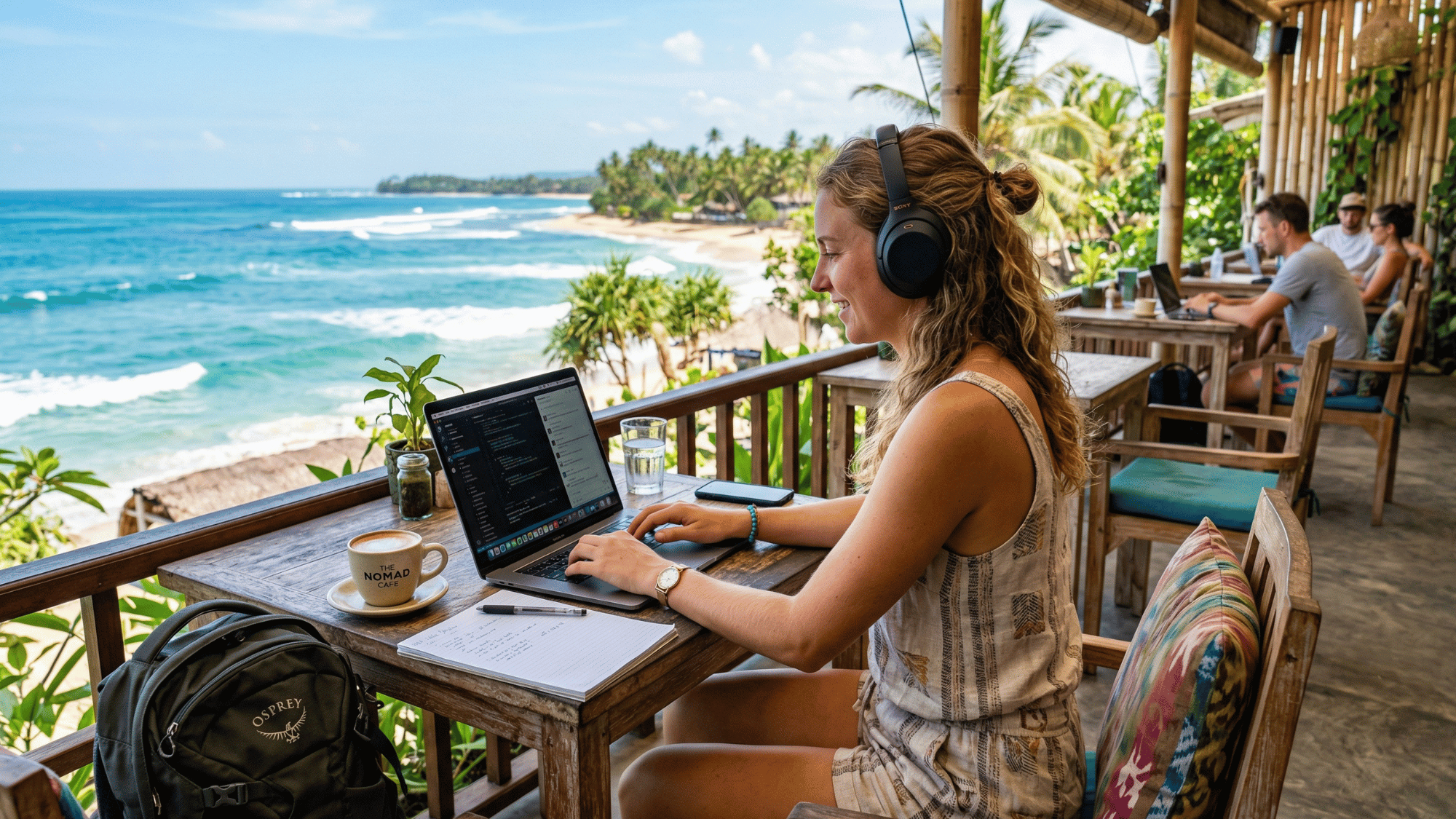
More people are choosing the digital nomad lifestyle because it offers something traditional work often cannot: the freedom to earn a living while designing their lives on their own terms.
- Remote work is now common: More companies offer flexible jobs that allow people to work from anywhere.
- People want more freedom: This lifestyle gives control over location, schedule, and daily routine.
- Lower cost of living: Many earn in stronger currencies while spending less in affordable countries.
- Work and travel together: People can find new places without taking long breaks from their careers.
- Technology enables everything: Fast internet and digital tools make remote work possible across the world.
Before Going Digital Nomad: Pros and Cons You Must Know
Before you go nomadic, it helps to look at both the benefits and the challenges so you can make a smart decision with clear expectations.
| ASPECT | PROS | CONS |
|---|---|---|
| Freedom | Choose where to live and work. | Constant movement can feel unstable. |
| Work Flexibility | Set your own schedule. | Time zones can make meetings hard. |
| Cost of Living | Save money in cheaper countries. | Flights and visas add hidden costs. |
| Travel Opportunities | search for new places while working. | Travel days can hurt productivity. |
| Personal Growth | Become more adaptable and independent. | Loneliness can be a challenge. |
| Career Options | Access global remote opportunities. | Income can be unpredictable. |
| Lifestyle Design | Build a routine that fits you. | Balancing work and travel takes discipline. |
| Networking | Meet people from many cultures. | Deep connections are harder with short stays. |
| Work Environment | Work from cafés or coworking spaces. | Wi-Fi and noise can disrupt work. |
| Mental Health | New experiences can feel refreshing. | Fast travel can lead to burnout. |
Beginner’s Roadmap to The Digital Nomad Lifestyle
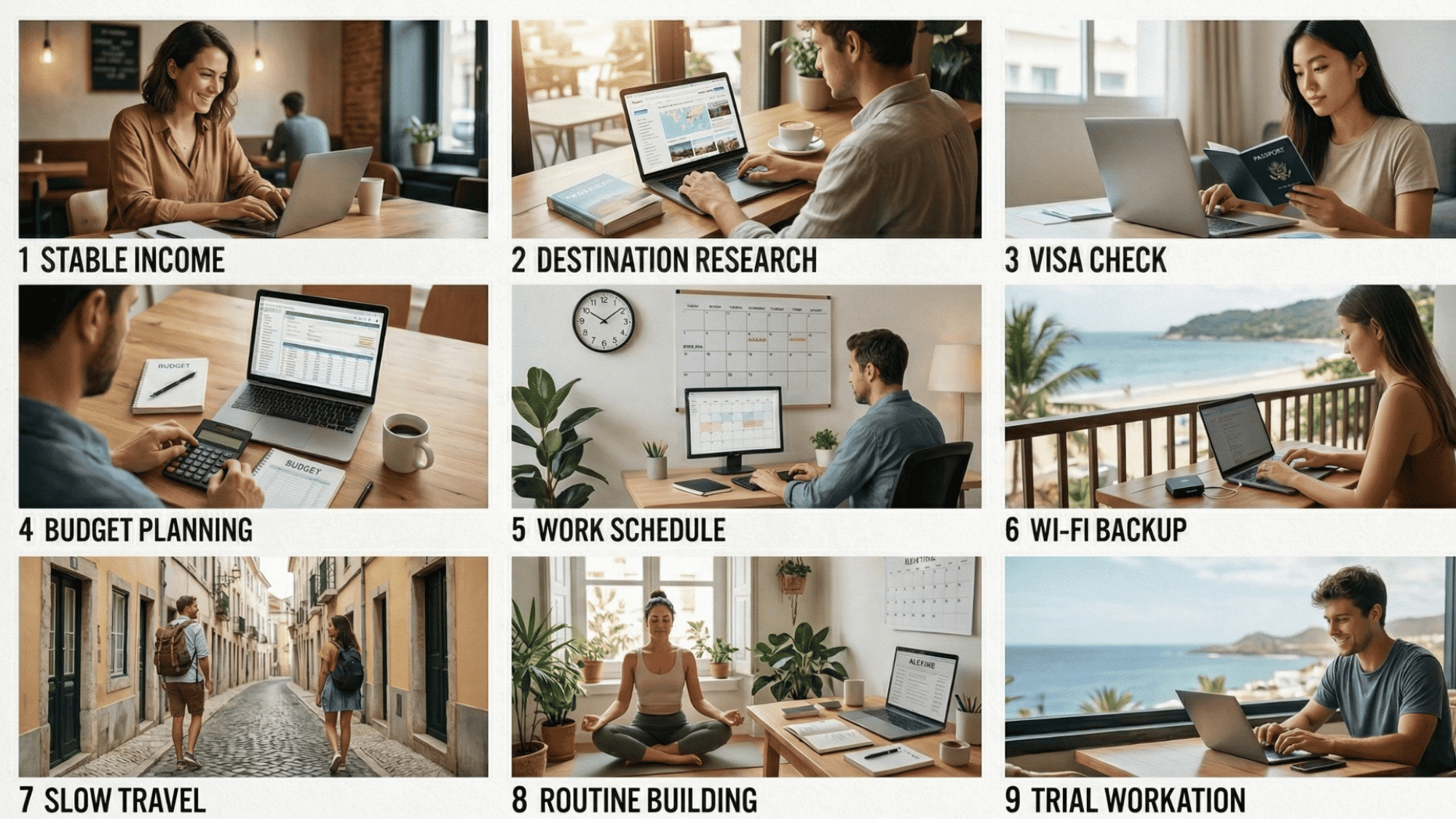
If you are new to the digital nomad lifestyle, this beginner’s roadmap will help you take the right steps in the right order so you can start with confidence and avoid common mistakes.
1. Build a Stable Income Before You Book Anything
Before you start traveling, make sure your income is steady and predictable. A remote job, freelance clients, or an online business can all work, but consistency matters more than speed.
Start by calculating your monthly expenses, and make sure your income comfortably covers them. If possible, keep one backup income source so you are not dependent on a single client or employer.
2. Pick a First Destination that Supports Your Work
Your first destination should make work easier, not harder. Look for places with reliable internet, affordable rent, and a safe environment where you can focus.
Time zone compatibility is also important if you work with clients or teams in another country. A good first city helps you settle into the lifestyle without unnecessary stress.
3. Check Visa Rules and Work Legality in Advance
Every country has different visa rules, and many do not allow remote work on a tourist visa. Before booking, check how long you can stay and what kind of visa you need.
Some countries offer digital nomad visas for remote workers. Planning this in advance helps you avoid legal issues, fines, or sudden travel disruptions.
4. Create a Monthly Budget and Emergency Fund
A clear budget helps you stay in control as you move between countries. List your fixed costs like rent, food, transport, internet, and insurance, then add a buffer for unexpected expenses.
It is also smart to build an emergency fund that can cover 3 to 6 months of living costs. This gives you peace of mind if work slows down or travel plans change.
5. Set a Daily Work Schedule You Can Stick To
Without a routine, it is easy to lose focus when every day feels like a travel day. Set fixed hours for work, meetings, and breaks, just like you would in a normal office.
Try to do your most important tasks during your peak energy hours. A consistent schedule helps you stay productive and still leaves time to look around.
6. Confirm Wi-Fi Quality and Keep a Backup Internet Option
Internet quality can make or break your workday, so never assume it will be good. Check recent reviews, ask hosts for speed test screenshots, and choose places known for strong connectivity.
Always carry a backup option, such as a local SIM card or a portable hotspot. This small step can save you from missed meetings and stressful deadlines.
7. Prevent Burnout by Slowing Down Your Travel Pace
Traveling too fast may feel exciting at first, but it quickly becomes exhausting. Constant packing, planning, and adjusting can drain your energy and hurt your work performance.
Stay in one place for a few weeks or months to create stability and reduce stress. Slower travel gives you time to enjoy the place without feeling rushed every day.
8. Build a Portable Routine that Works in Any City
A simple routine keeps you grounded, even when your location changes often. Start your day with a few repeatable habits, such as planning tasks, checking messages, and setting priorities.
Use fixed work blocks so you know when to focus and when to relax. Ending your day with a shutdown ritual helps you separate work from personal time.
9. Test the Lifestyle with A Short Trial Before Going Full Time
You do not need to commit to full-time nomad life right away. A short 4- to 8-week trial can help you understand how you handle work, travel, and daily routines on the road.
Use this time to test your budget, internet setup, and productivity. If it works well, you can transition with confidence and make smarter long-term decisions.
Tips from Experienced Digital Nomads
Before you start your digital nomad venture, it helps to learn from people who have already lived it and figured out what actually works.
Do not move too fast : r/digitalnomad on Reddit
Moving constantly sounds exciting but quickly becomes exhausting. Staying longer in one place helps you build routine and stay productive.
Constant travel can become mentally draining: u/EnvironmentalLog5001 on Reddit
Long-term nomads report that constantly adjusting to new places creates ongoing stress. Learning new surroundings, routines, and logistics repeatedly can feel overwhelming.
Stay longer to build routine: freedom galaxy on Reddit
Experienced nomads recommend staying at least a month to create stability and routine. Longer stays help you settle into a comfortable work schedule and reduce travel stress.
Slow down to avoid burnout: Royal_planner on Reddit
Many users emphasize slowing down and staying longer improves mental health and balance. A slower pace allows you to rest, recharge, and maintain consistency in your routine.
Frequent moving leads to burnout and fatigue: Traveling nomad family on Reddit
Real experiences show that constant packing and moving quickly becomes tiring. The physical and mental effort of travel adds up over time.
Wrapping It Up
The digital nomad lifestyle is not a perfect life. It is just a different one. And for the right person with the right mindset, it can be one of the most rewarding ways to work and live that exists today.
College freedom and challenges drive real personal growth beyond any office experience.
It is not for everyone, and that is okay. But if building your own career while exploring excites you, pay attention.